


Missing the Rally, Keeping the Edge
There are phases in the market where doing the right thing doesn’t just feel uncomfortable; it actively makes you look like you’re getting it wrong, and this is exactly one of those moments.
When a portfolio manager is focused on protecting profits, staying on the defensive side, and doing everything possible to minimize drawdowns, the perception of that approach becomes entirely dependent on what the market decides to do next. When things break down and indices roll over, that discipline looks sharp, almost visionary, but when the market turns around and starts pushing higher aggressively, especially without structure, the same approach suddenly looks slow, hesitant, even incompetent.
Over the past two weeks, we’ve clearly been on that side of the trade.
We moved from a market environment that looked extremely fragile, with a very real risk of a deeper correction driven by negative headlines and ongoing geopolitical tensions, into a rally that very few could have anticipated in both speed and magnitude, with the Nasdaq gaining roughly 16% in the span of just two weeks, which is the kind of move that doesn’t just catch you off guard, it forces you to constantly question whether you’re reading the market correctly at all.
And when you’re positioned defensively during a move like this, the outcome is almost inevitable.
Over the last 30 days, we’ve underperformed the indices by more than 6%, and while there’s no point in trying to sugarcoat it, because we feel that gap and we’re fully aware of it, there’s also a level of acceptance that comes with understanding that our framework simply wouldn’t allow us to behave differently in a context like this.

How do you build meaningful positions when the market is moving this fast, with this level of volatility, without any real pause, without consolidation, without those moments where price tightens, and risk can actually be defined? From our perspective, you don’t, or at the very least, you don’t do it with any meaningful size, because stepping in aggressively in these conditions isn’t a calculated decision; it’s a bet.
And that’s not what we do.
Capital protection remains the priority, even when it comes at the cost of underperformance, because while lagging the indices is frustrating and, at times, uncomfortable, exposing the portfolio to uncontrolled downside is something we’re simply not willing to accept.
At the same time, when we zoom out slightly, this type of move doesn’t feel particularly sustainable, especially considering how quickly it developed and how little structure has been built along the way, which makes it reasonable to expect some form of reset, whether that comes in the form of a gap down or a broader pullback over the next couple of weeks.
Paradoxically, that would be exactly what we need.
A period of consolidation would allow leaders to cool off, build proper bases, and create those cleaner, more defined setups where risk is contained and positioning can be scaled with more conviction, which is where our approach tends to perform at its best.
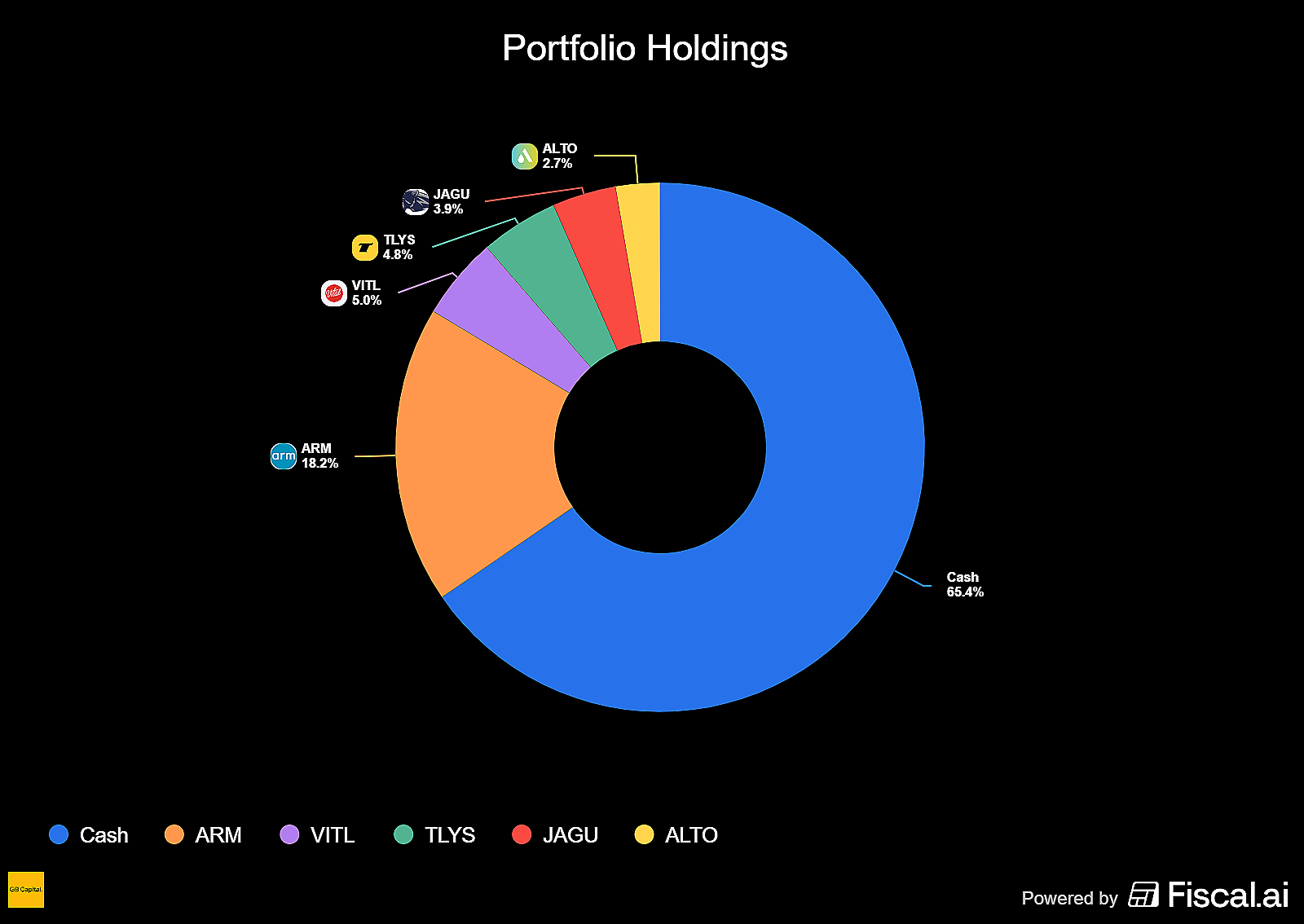
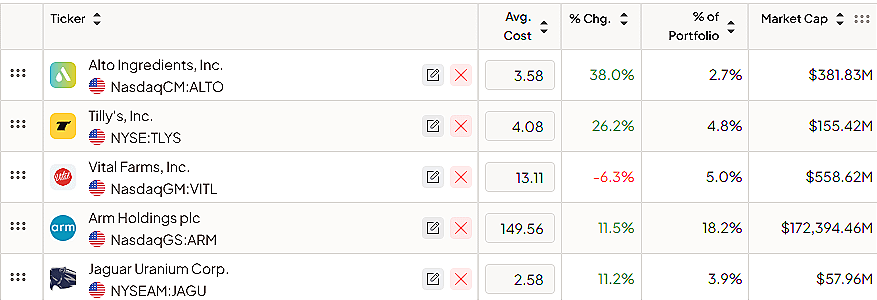
Despite the overall environment, we did open two new positions this week, and so far they are behaving well, which at the very least confirms that our selection process is still aligned with what the market is rewarding, even if our overall exposure remains limited for now.
As always, every phase of the market, regardless of how frustrating or uncomfortable it might feel in real time, carries something valuable in terms of feedback, and the process remains the same: observe, adapt, refine, and make sure that when conditions finally align, we are ready to act with clarity and size.

Here’s a look at this week’s market health, with a breakdown of index and sector performance.


We’re currently building the beta version of our app, and it’s already live.
It is not a generic solution for every market participant, but a platform built specifically for swing trading, momentum strategies, and short to medium-term investing.
You can already sign up, access the beta, and start using it today.
As previously stated, all paid subscribers will receive full access to the platform at no additional cost.

Latest articles:


Each stock carries a risk badge: ⚠️ High | 📊 Medium | 🛡️ Low.
Based on volatility, float, technicals, and fundamentals. Size your positions accordingly.
📈 Free Setup: Make It Count
CRDO: Credo Technology Group Holding Ltd ⚠️
What they do: A semiconductor company specializing in high-speed connectivity solutions
Why watch? Credo has been one of the standout performers in the semiconductor space over the past several weeks, and the reasons go well beyond simple momentum. The company sits at the intersection of two powerful forces: relentless AI infrastructure spending and the increasingly complex networking demands of next-generation data centers.
A common misconception about Credo is that it operates in a narrow niche. In reality, the company has been quietly building a comprehensive optical networking portfolio. It never fully exited the optical market, continuing to sell digital signal processors (DSPs, the chips that manage how data is encoded and transmitted over optical fiber) to other component manufacturers. Its recently launched Bluebird and Cardinal DSPs are designed for upcoming 1.6 terabit-per-second optical transceivers, which represent the next frontier in data center bandwidth.
But Credo didn’t stop at selling components to other companies. It made the strategic decision to design and sell its own complete transceivers, launching its first product in March using its proprietary Robin DSP at 800G transmission speeds. A 1.6T version is widely expected to follow. For context, higher transmission speeds mean more data can move through a single connection, which is critical as AI workloads generate enormous volumes of data that must travel between servers at extraordinary speeds.
The acquisition of DustPhotonics for approximately $750 million in cash, $550 million in stock, and contingent milestones adds another dimension to this story. DustPhotonics specializes in silicon photonics: a technology that integrates optical components directly onto silicon chips, enabling faster and more energy-efficient data transmission. This acquisition positions Credo for the transition to co-packaged optics (CPO), a next-generation architecture where optical components are integrated directly alongside processors rather than connected through cables. Getting ahead of this shift could prove enormously valuable as data centers evolve.
Technical Outlook: The stock has delivered a near-100% gain in roughly two weeks, an extraordinary move that now requires patience. The consolidation is still in its early stages, just two days in, and the stock needs more time to digest those gains before the next leg can develop sustainably. The 10-day exponential moving average has been the stock’s preferred support level throughout this run, and a pullback to that level ( or to the 20-day EMA) would create a far more attractive entry point than chasing the current price. The $165.00 level represents the key threshold for the next advance. This is a stock worth monitoring closely, but the best opportunity will likely come on a controlled pullback rather than at current levels.


Why We Don’t Wait for Sunday
Markets don’t move on your schedule. The best low-risk entries don’t announce themselves politely and wait for the weekend newsletter.
They show up when they show up. And if you’re not positioned, you miss them.
Paid members get real-time alerts: exact entries, stops, position sizing, and the thesis behind every trade. The same information we use to manage our own capital.
Free members get just one pick on Sunday.
Does that sound like an edge to you?
What’s Inside Premium
Free Access to TradeDeck
Premium members get early access to TradeDeck, the trading platform we’re building. The value of the platform alone already exceeds the cost of the subscription.
Watchlist Elite (7-9 Stocks)
Each selection undergoes rigorous financial analysis, technical evaluation, and strategic assessment.
Full Portfolio Transparency
Every position we hold. Entry price. Current P&L. Stop level. Real money, real risk.
Real-Time Trade Alerts (Chat Access)
This is where the edge lives. Exact entries, stops, and position sizing. Real-time. No lag
Quick Picks (5 Names)
Additional setups that just missed our main criteria but are worth watching.
Chat Access
See our thought process in real time. Ask questions. Watch how we manage risk.
The Tools We Actually Use
Member discounts on TC2000, Fiscal.ai, and other platforms. Same tools, better pricing.
What Paid Members Say:
We’re entrepreneurs first, traders second. We’ve sat in the CEO chair. We know what real execution looks like and how to spot it.
€39/month or 299€/year. Less than one losing trade. Cancel anytime.
Portfolio updates and new positions:

💎📈 Watchlist Elite: Premium Market Movers
CRWV: CoreWeave Inc ⚠️
What they do: A specialized cloud computing provider focused on GPU-accelerated infrastructure
Why watch? CoreWeave has delivered roughly 80% gains in less than three weeks since late March 2026, and the question every investor is asking is whether the move is exhausted or just beginning. The answer likely depends on how you view the company’s positioning within the AI infrastructure buildout — and the evidence suggests the story is far from over.
The numbers are striking. CoreWeave reported $5.1 billion in revenue for fiscal year 2025, representing 168% year-over-year growth. More importantly, the company’s backlog (essentially future contracted revenue) reached $66.8 billion, a 342% increase year-over-year. That backlog figure is critical because it provides long-term revenue visibility in a business that requires enormous upfront capital investment. Investors can see years of future revenue already locked in.
Recent contract announcements reinforce this visibility. CoreWeave secured a deal with Meta valued at approximately $21 billion, an agreement with Anthropic for production inference workloads, a $6 billion deal with trading firm Jane Street, and a partnership with Perplexity AI for inference support. They represent binding commitments from some of the most sophisticated technology organizations in the world.
The inference angle deserves particular attention because it’s often misunderstood. Most people associate CoreWeave with AI training, the computationally intensive process of building AI models. But inference, which is the process of actually running those models to generate responses, is becoming an equally important workload. The Anthropic and Perplexity agreements signal that CoreWeave is successfully expanding into this segment, which could prove to be a larger and more recurring revenue stream over time. The company is also expanding its software and platform offerings alongside its hardware, creating cross-selling opportunities that improve the economics of each customer relationship.
The primary concern is profitability. CoreWeave remains in the red due to the capital expenditure required to build and maintain its GPU infrastructure. This is a company that must spend aggressively today to capture market share, and investors need to be comfortable with that trade-off.
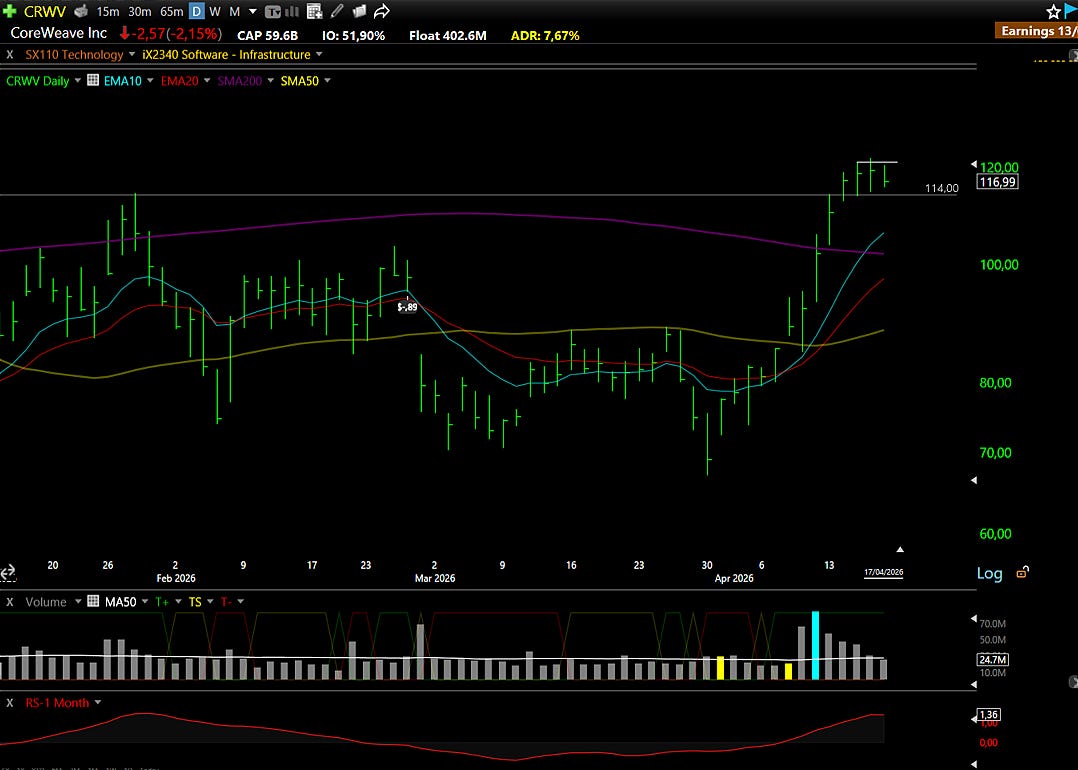
Technical Outlook: Like many of the high-momentum names in this week’s watchlist, CoreWeave has made a significant move from recent lows and is now entering a consolidation phase. The setup mirrors what we’re watching in CRDO: the ideal scenario involves either a tight, low-volume consolidation above the $114.00 level, or a controlled pullback to the rising 10-day and 20-day EMAs, where the trend can be re-entered with a more favorable risk profile. Neither setup is fully formed yet, but this is a name worth keeping on the radar as the consolidation matures.
BE: Bloom Energy Corporation⚠️
What they do: A manufacturer of solid oxide fuel cell systems that generate electricity on-site
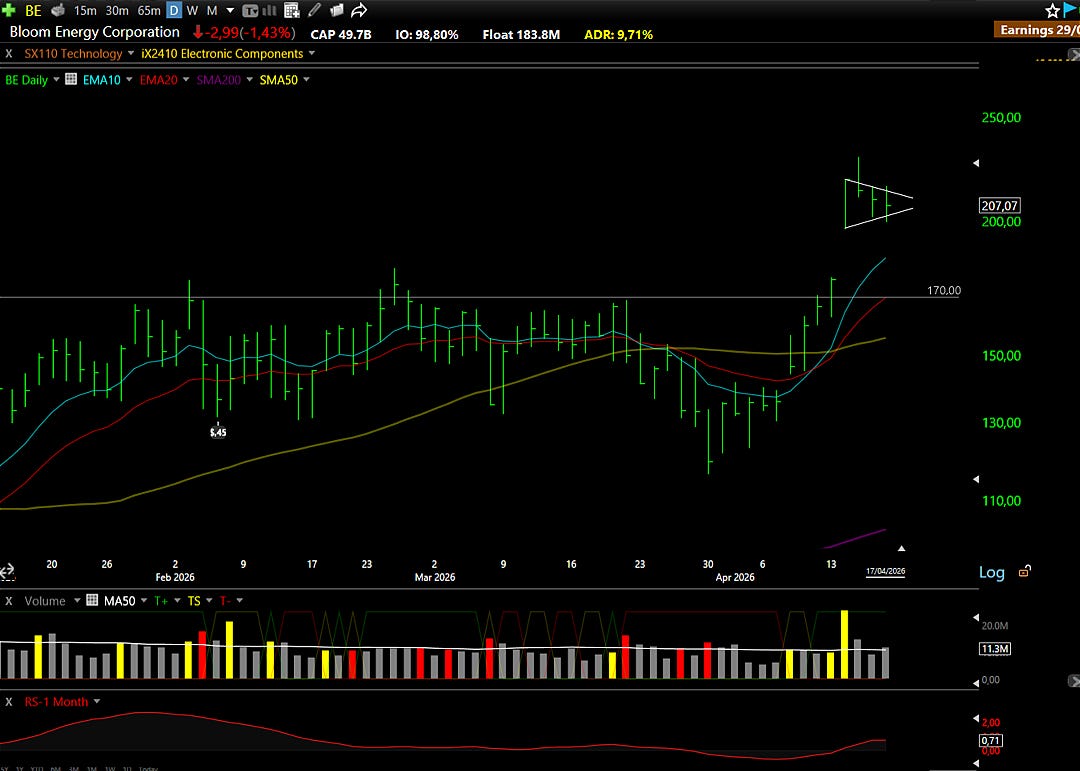
Why watch? Bloom Energy has emerged as one of the more compelling infrastructure plays in the AI buildout, and its recent partnership expansion with Oracle crystallizes exactly why. The two companies announced an expanded agreement covering an initial 1.2 gigawatts of capacity, with deployment already underway and continuing through 2027. To put that in perspective, 1.2 GW is enough to power roughly one million average American homes, and Oracle is claiming rights to upwards of 60% of Bloom’s expanded production capacity.
The reason data center operators are turning to Bloom Energy is straightforward: the electrical grid in many parts of the country simply cannot deliver power fast enough to meet the explosive demand from AI infrastructure. Utility connections can take years to secure, while Bloom’s fuel cell systems can be deployed on-site and generate power independently of the grid. For hyperscale operators racing to bring capacity online, that flexibility is invaluable.
The financial profile is genuinely impressive for a company in this stage of growth. Bloom guided for approximately $3.2 billion in 2026 revenue, representing more than 50% growth. Gross margins exceed 30%, and the company is targeting operating income of over $400 million for the year — a level of profitability that distinguishes Bloom from many of its peers in the clean energy space, where losses are the norm rather than the exception.
The risks are real. The stock traded below $20 just a year ago, which illustrates how dependent the valuation is on continued AI data center demand. If that buildout slows or if grid capacity expands faster than expected, the investment thesis weakens considerably. The valuation also looks stretched when measured against earnings projections a couple of years out, leaving little margin for error in execution.
Technical Outlook: The stock is currently flagging after a substantial run, but the pattern needs more time and likely a more meaningful pullback before a low-risk entry presents itself. The $200.00 level is the immediate support that must hold: the stock recently defended this level, which is an encouraging sign. If that support gives way, the next logical areas to watch are $180.00 and $170.00, where the rising 10-day and 20-day EMAs should eventually catch up to the price. The setup here is broadly similar to what we’re watching in CRDO and CRWV — strong underlying stories that need to consolidate before the next leg can develop cleanly.
XENE: Xenon Pharmaceuticals Inc 🛡️
What they do: A clinical-stage neuroscience company developing precision therapies for epilepsy and neuropsychiatric disorders
Why watch? On March 9, 2026, Xenon reported Phase 3 clinical trial results that would make any drug developer envious. The X-TOLE-2 study of its lead compound azetukalner in patients with focal onset seizures ( a common form of epilepsy where abnormal electrical activity originates in one area of the brain) met its primary endpoint with statistical significance that borders on extraordinary.
For readers unfamiliar with clinical trial statistics, a p-value measures the probability that a result occurred by chance. A p-value below 0.05 is typically considered statistically significant in medicine. The p-value for the higher dose of azetukalner in this study was 0.000000000006: essentially zero. The drug reduced monthly seizure frequency by 53.2% compared to just 10.4% for placebo. These are not marginal results.
Azetukalner works by opening Kv7 potassium channels in the brain, a mechanism that helps stabilize overactive neurons and reduce the abnormal electrical firing that causes seizures. What makes this drug particularly interesting is its breadth of potential applications. Xenon is currently running Phase 3 studies in tonic-clonic seizures (the classic full-body convulsive seizures most people associate with epilepsy), major depressive disorder, and bipolar depression. A single drug with validated efficacy across multiple neurological and psychiatric conditions represents a substantial commercial opportunity.
The regulatory path is clear. Xenon plans to submit a New Drug Application to the FDA in the third quarter of 2026, seeking approval to market azetukalner commercially in the United States. A recent equity offering at $57 per share provided the company with capital to fund this process, though it also created some near-term selling pressure as new investors established positions.
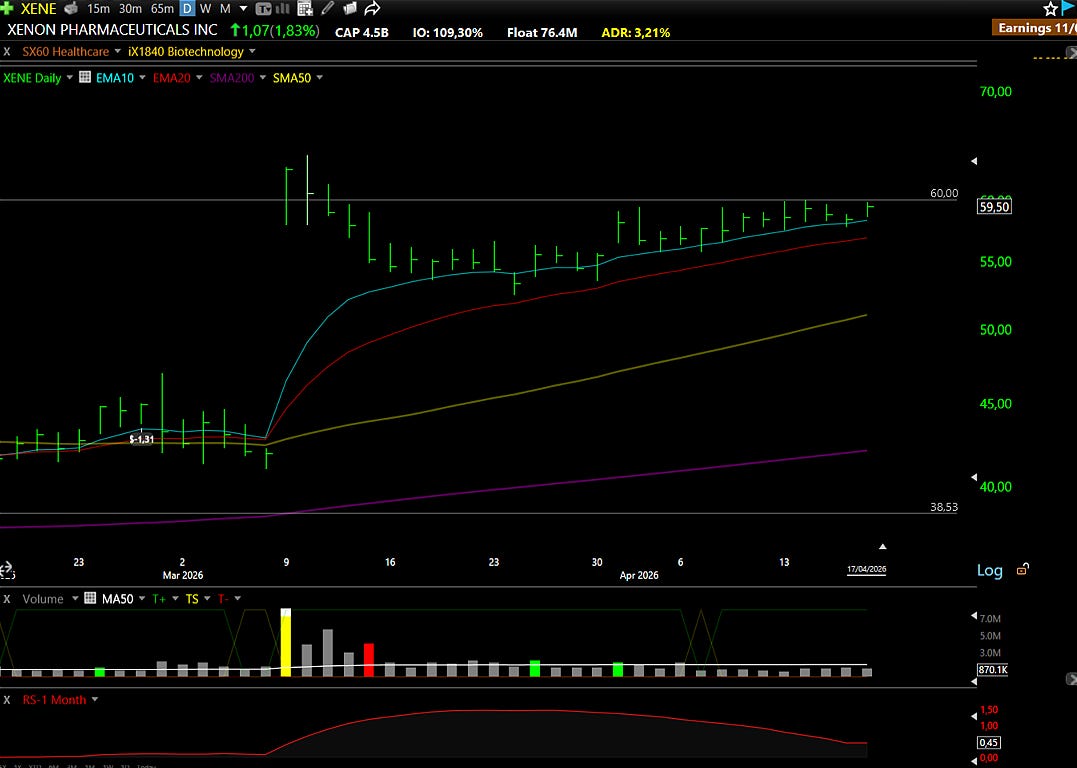
Technical Outlook: Despite the exceptional clinical data, the stock has essentially gone sideways since the March announcement. The offering overhang has been absorbed, and the stock has recently reclaimed its 10-day EMA and is riding it well. The ideal setup would involve one more modest pullback (perhaps a brief undercut of the 10-day EMA to shake out remaining weak holders), followed by a recovery. This exact pattern has already played out multiple times since the data release. The critical level to watch is $60.00, which has acted as resistance on multiple attempts. A convincing break above that level on meaningful volume would signal that the consolidation is complete and the next leg higher is underway.
VFS: VinFast Auto Ltd ⚠️
What they do: A Vietnamese electric vehicle manufacturer
Why watch? Let’s be direct about what VinFast is and isn’t. The most recent quarterly results showed revenue of $1.6 billion in Q4 2025, up 118% quarter-over-quarter and 139% year-over-year. Full-year 2025 revenue reached $3.6 billion, more than doubling from the prior year. Gross margins, while still deeply negative at minus 40%, showed meaningful improvement from minus 79% a year earlier. The trajectory is moving in the right direction.
But the company is still losing substantial money on every car it sells, and the path to profitability remains distant and uncertain. This is not a stock for investors seeking fundamental value. The reason it appears in this watchlist is entirely different; it’s about what the tape is saying.
Over the past two weeks, VinFast printed two of the highest-volume trading sessions in the last 365 days of trading on two consecutive days, accompanying a roughly 70% price surge in a very short period. Volume is the fuel that drives sustained moves, and when a stock with a large float generates that kind of trading activity, it warrants attention regardless of the underlying fundamentals. The float is not so large (50M, the rest is locked), but the stock is liquid.
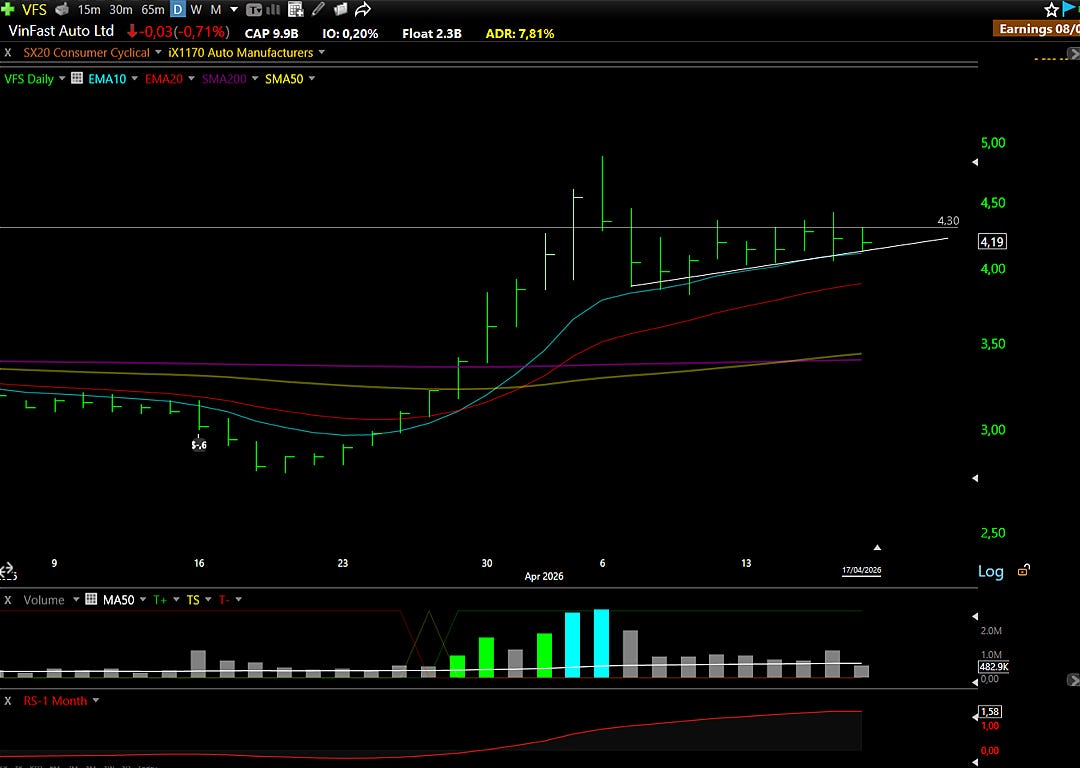
Technical Outlook: Since the IPO crash of 2023, the stock has spent years trapped below the $4.30 level, unable to reclaim that threshold. The recent surge was the first time in that entire period that the stock broke out with conviction and meaningful volume. Since that move, the stock has been consolidating in an orderly fashion, printing a series of higher lows while tracking the 10-day EMA closely: exactly the behavior you want to see after a strong initial move. Additional consolidation would be welcome before committing capital, but if this move has legs rather than being a one-time event, the next advance could unfold over the coming weeks. Treat this as a speculative position with appropriate sizing.
BBAR: Banco Frances SA 📊
What they do: One of Argentina's largest private-sector banks
Why watch? To understand the opportunity in BBAR, you need to understand what Argentina’s banking sector has been through and where it’s going. For years, Argentina’s banks operated in an environment of chronic hyperinflation where the business model was essentially automatic. Banks held government bonds and inflation-indexed assets that constantly repriced upward, generating what amounted to effortless profits from monetary distortion rather than genuine economic activity. Real lending to businesses and consumers was minimal.
President Milei’s economic program changed the rules of the game dramatically. By bringing inflation down and forcing fiscal discipline, the government eliminated the artificial profit engine that banks had relied upon. Argentina’s banks are now being compelled to operate like banks in a normal economy: extending credit based on actual income, production, and consumption. This transition is painful in the short term. Banks must increase provisions (money set aside to cover potential loan losses), which compresses margins and weighs on reported profits. The credit cycle is under significant pressure as the economy adjusts.
But here’s the other side of that coin: Argentina’s credit penetration (the ratio of bank loans to GDP) is among the lowest in Latin America precisely because the old model discouraged real lending. As the economy normalizes and credit expands from a very low base, the growth runway for Argentine banks could be substantial. BBAR enters this transition with the strongest credit quality among its peers and a capital position comfortable enough to absorb losses without solvency concerns.
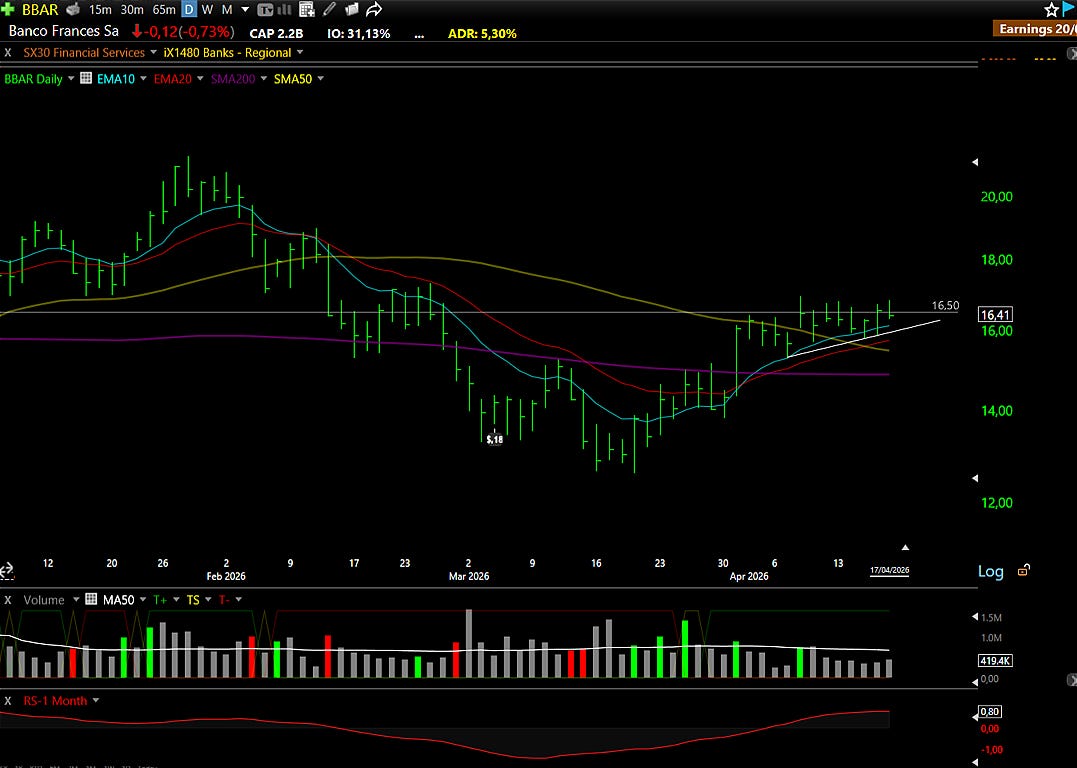
Technical Outlook: On a monthly chart, BBAR has been quietly forming a massive cup and handle pattern. The $16.50 area has historically served as the inflection point where trend changes have originated, and that level deserves close attention. On the daily chart, a smaller cup and handle has formed off a double bottom near $13.00 over recent weeks. A couple of additional days of low-volume consolidation would be ideal, but the stock appears to be approaching a point where the next leg higher could begin. The setup is building quietly, which is often exactly how the best opportunities develop.
NRXS: Neuraxis Inc⚠️
What they do: A US medical technology company
Why watch? Neuraxis is the kind of company that rarely appears on most investors’ radar, and that’s precisely what makes it interesting. With a market capitalization of approximately $80 million, it sits well below the threshold where institutional research coverage typically begins, yet the fundamental developments unfolding here are genuinely significant.
IB-Stim is a wearable device priced at $1000 per unit, with patients using one device per week over a four-week treatment course, for a total treatment cost of $4000. Gross margins exceed 80%, approaching 85%, which means the economics of each sale are exceptional. The addressable market for the two cleared indications in the pediatric population alone is estimated at $5 billion annually in the United States.
The reimbursement picture, which is often the make-or-break factor for medical device companies, has been developing rapidly. A permanent Category I CPT code (the billing code that insurance companies use to process claims) became effective January 1, 2026. This is a critical milestone because permanent codes signal to insurers that a treatment is established and reimbursable, rather than experimental. The December 2025 win with Anthem, covering 45 million members, was a landmark moment, and negotiations with additional insurers are ongoing. A new Federal Supply Schedule contract has also opened a direct channel to seven million veterans, with initial orders already exceeding internal expectations.
The cash position of approximately $6 million is lean, but management stated on the most recent quarterly call that no near-term financing is required, a statement that carries more weight given the improving revenue trajectory and the high-margin nature of the business.
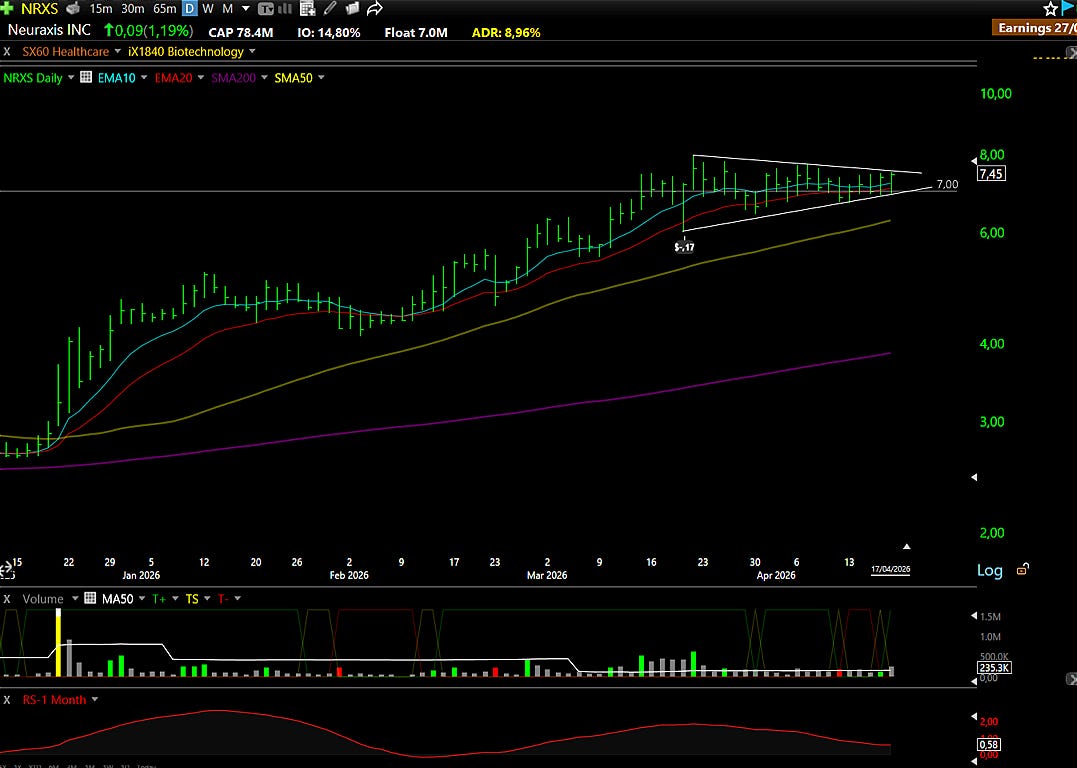
Technical Outlook: The stock is trading near all-time highs, with the $7.00 level (which also corresponds to the highs from the IPO day in 2023) providing support. After an initial move of nearly 200%, the stock has been consolidating for approximately five weeks in what resembles a Volatility Contraction Pattern (VCP). The trigger to watch is a decisive move above $7.50 on above-average volume. Until that level breaks convincingly, patience is the appropriate posture.
These tickers below didn’t make the main cut, but they’re on our radar for a reason. We’ve vetted them; now you decide if they fit your game.
More opportunities, less noise.
⚡📋Scanned Stocks: Quick Picks
FDMT - 4D Molecular Therapeutics Inc
MIST - Milestone Pharmaceuticals Inc
SCCO - Southern Copper Corp
IPGP - Ipg Photonics Corp
APLD -Applied Digital Corporation
“Don’t focus on making money; focus on protecting what you have.”
Paul Tudor Jones
Disclaimer: This analysis is for informational purposes only and should not be considered financial advice. Always conduct your research and consult with a licensed financial advisor before making investment decisions.