


When the Kitchen Gets Too Hot, You Build Your Own
This week, the market did what it does best: it made liars out of everyone.
January started with Wall Street leaning so far forward they were practically kissing the pavement. Record low cash. Hedges? What hedges? AI was the lock, the sure thing, the trade you’d mortgage your mother’s house for.
Then, in the span of a few weeks, the script flipped.
Not because AI stopped working (it’s working just fine, thanks) but because someone finally asked the question nobody wanted to hear: who’s getting cooked by this thing?
Turns out, it’s not the robots that are the problem. It’s the humans who thought they were irreplaceable.
The Software Purge
The S&P 500 Software Index didn’t just stumble; it got dragged into the alley and worked over. Meanwhile, Goldman’s “AI resilient” basket? Outperforming as if it had insider information. The market’s telling you something, and it’s not subtle: software isn’t dead, but the gravy train has left the station.
If your product is a glorified wrapper around a database, a feature some kid with a laptop can replicate in a weekend using Claude or ChatGPT, you’re in trouble.
The companies that survive this aren’t the ones with the slickest UI or the best Series B pitch deck. They’re the ones managing the messy, high-stakes stuff: systems of record, critical data infrastructure, workflows where a screw-up means lawsuits, not just a bad Yelp review.
Complexity is the new moat. Liability is the new defensibility. Everything else is just noise waiting to get compressed into an API call.

The Contagion Spreads
But it didn’t stop at software. The fear metastasized. Wealth managers, brokers, and tax advisers (the entire white-collar apparatus that spent a decade getting fat on margin expansion) suddenly looked vulnerable.
A decade of optimism got repriced in weeks.
Private debt markets, loaded up on exposure to these businesses, started sweating. The S&P 500 had one of its ugliest stretches in months before a softer inflation print gave it permission to stop bleeding.
We’re range-bound now. Choppy. Difficult. The kind of market where forcing a trade is how you get your face ripped off.
Cash Is a Position (Again)
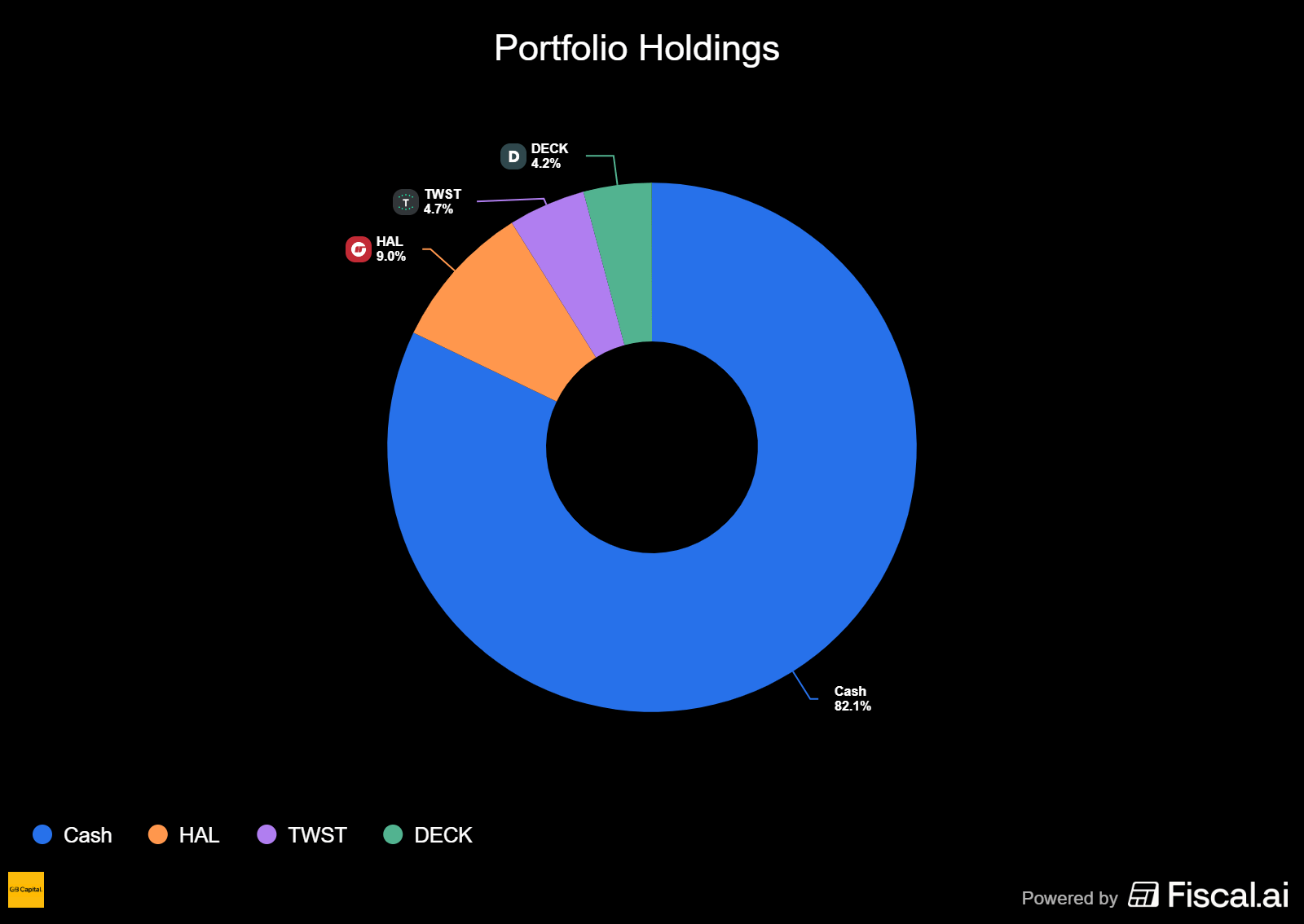
So we did what any sane operator does when the kitchen’s on fire: we stepped back. Closed another position. Raised more cash.
When setups aren’t following through, when the edge isn’t there, you don’t trade for the sake of trading. You wait. You watch. You preserve capital.
Aggression has its place. This isn’t it.
Building in the Wreckage
But here’s where it gets interesting.
While the market was busy eating itself, we decided to test the AI disruption thesis firsthand.
We’ve been building our own app: rewriting and integrating the proprietary algorithms and indicators we originally developed on TC2000, but in a new environment built specifically for how we trade.
(Shhh… keep it between us — it’ll be free for our Substack paid subscribers! 😉)
Swing setups. Momentum plays. Real-time signals. No bloat.
And you know what? It’s shockingly easy now!
Not frictionless: there are still technical landmines, moments where you’re staring at the screen wondering what the hell just broke, but the leverage AI tools provide is undeniable. A small team with strong ideas and some curiosity can build things that would’ve required a full engineering department three years ago.
It feels like building a video game, except this one actually makes us better at our job. And yeah, some companies are absolutely going to get disrupted.
We’re watching it happen in real time, because we’re doing the disrupting.
Irreplaceability at All Costs
So here’s where we are. The market’s shifted from “growth at all costs” to “irreplaceability at all costs.” The companies that win from here aren’t the ones with the best story; they’re the ones that are too embedded, too complex, too critical to replace.
We’re staying cautious. Higher cash. Selective exposure. And while everyone else is panicking about AI, we’re building tools that give us an edge in whatever comes next.
Because in the end, the best way to survive disruption isn’t to bet on who wins.
It’s to make sure you’re not the one getting replaced.


Join the free TradeDeck waitlist now to show your interest!
If demand is strong, we’ll fast-track the public beta and open limited early access to the software we’re currently testing in-house.
Latest articles:


Each stock carries a risk badge: ⚠️ High | 📊 Medium | 🛡️ Low.
Based on volatility, float, technicals, and fundamentals. Size your positions accordingly.
📈 Free Setup: Make It Count
PAHC: Phibro Animal Health Corp 📊
What they do: A global developer and manufacturer of animal health products and mineral nutrition solutions
Why watch? Phibro Animal Health has undergone a significant transformation following its acquisition of Zoetis’ medicated feed additive (MFA) business, which has reshaped the company’s Animal Health division and provided a meaningful growth catalyst. For those unfamiliar with medicated feed additives, these are products mixed into animal feed to prevent disease, promote growth, and improve feed efficiency in livestock: a critical component of modern animal agriculture.
The company is executing on its “Phibro Forward Initiative,” a multi-year program designed to drive operational efficiency through structural changes. The initiative includes three key pillars: First, establishing a global procurement organization to leverage scale for better pricing and cost reduction. Second, strengthening Salesforce effectiveness and reducing employee turnover through CRM tools and enhanced customer focus, and third, expanding the product portfolio with new offerings for both livestock and companion animals, which should drive revenue diversification and growth.
The recent financial results demonstrate that this strategy is working. Phibro reported a strong second-quarter performance with net sales of $373.9 million, up 21% year-over-year, and a 41% increase in adjusted EBITDA. Management raised fiscal 2026 guidance to $1.45–$1.5 billion in sales, $245–$255 million in adjusted EBITDA, and $120–$127 million in adjusted net income, significant upward revisions that reflect confidence in the business trajectory.
The Animal Health segment led the growth, with sales rising 26% to $290 million, driven primarily by the acquired MFA business. The new MFA operations contributed $94.1 million in the quarter, with total MFA growth of 34%. Legacy MFA sales dipped approximately 5%, largely due to a roughly $10 million inventory-timing impact that management expects to reverse in the coming quarter.
From a balance sheet perspective, the company generated $47 million in trailing twelve-month free cash flow and ended the quarter with $74.5 million in cash and short-term investments. Gross leverage stands at 3.1x and net leverage at 2.8x; manageable levels given the growth profile and cash generation. Management also announced a planned CEO transition in July, with Jack Bendheim moving to executive chairman and Donnie Bendheim assuming the CEO role.
Technical Outlook: The stock was recently rejected at all-time highs of $54.62 and has since formed a very narrow Darvas box, a consolidation range of just $2.00 from low to high. This tight range indicates indecision but also compression, which often precedes a significant move. However, we generally prefer to see more than just a couple of days of consolidation before entering, as very short consolidations are more prone to failure. A few additional days of sideways action would increase the odds of a successful breakout. Once the stock clears the all-time high resistance at $54.62, there’s blue sky ahead with no overhead supply, a setup that can lead to explosive moves as there are no prior resistance levels to contend with.


Why We Don’t Wait for Sunday
Markets don’t move on your schedule. The best low-risk entries don’t announce themselves politely and wait for the weekend newsletter.
They show up when they show up. And if you’re not positioned, you miss them.
Paid members get real-time alerts: exact entries, stops, position sizing, and the thesis behind every trade. The same information we use to manage our own capital.
Free members get just one pick on Sunday.
Does that sound like an edge to you?
What’s Inside Premium
📊 Watchlist Elite (7-9 Stocks)
Each selection undergoes rigorous financial analysis, technical evaluation, and strategic assessment.
💼 Full Portfolio Transparency
Every position we hold. Entry price. Current P&L. Stop level. Real money, real risk.
⚡ Real-Time Trade Alerts (Chat Access)
This is where the edge lives. Exact entries, stops, and position sizing. Real-time. No lag
🎯 Quick Picks (5 Names)
Additional setups that just missed our main criteria but are worth watching.
💬 Chat Access
See our thought process in real time. Ask questions. Watch how we manage risk.
🛠️ The Tools We Actually Use
Member discounts on TC2000, Fiscal.ai, and other platforms. Same tools, better pricing.
What Paid Members Say:

We’re entrepreneurs first, traders second. We’ve sat in the CEO chair. We know what real execution looks like and how to spot it.
€39/month or 299€/year. Less than one losing trade. Cancel anytime.
Portfolio updates and new positions:


⚡ AI-optimized, human-verified: Our expert team carefully selected Premium market intelligence from Fiscal.ai data. Explore now →
💎📈 Watchlist Elite: Premium Market Movers
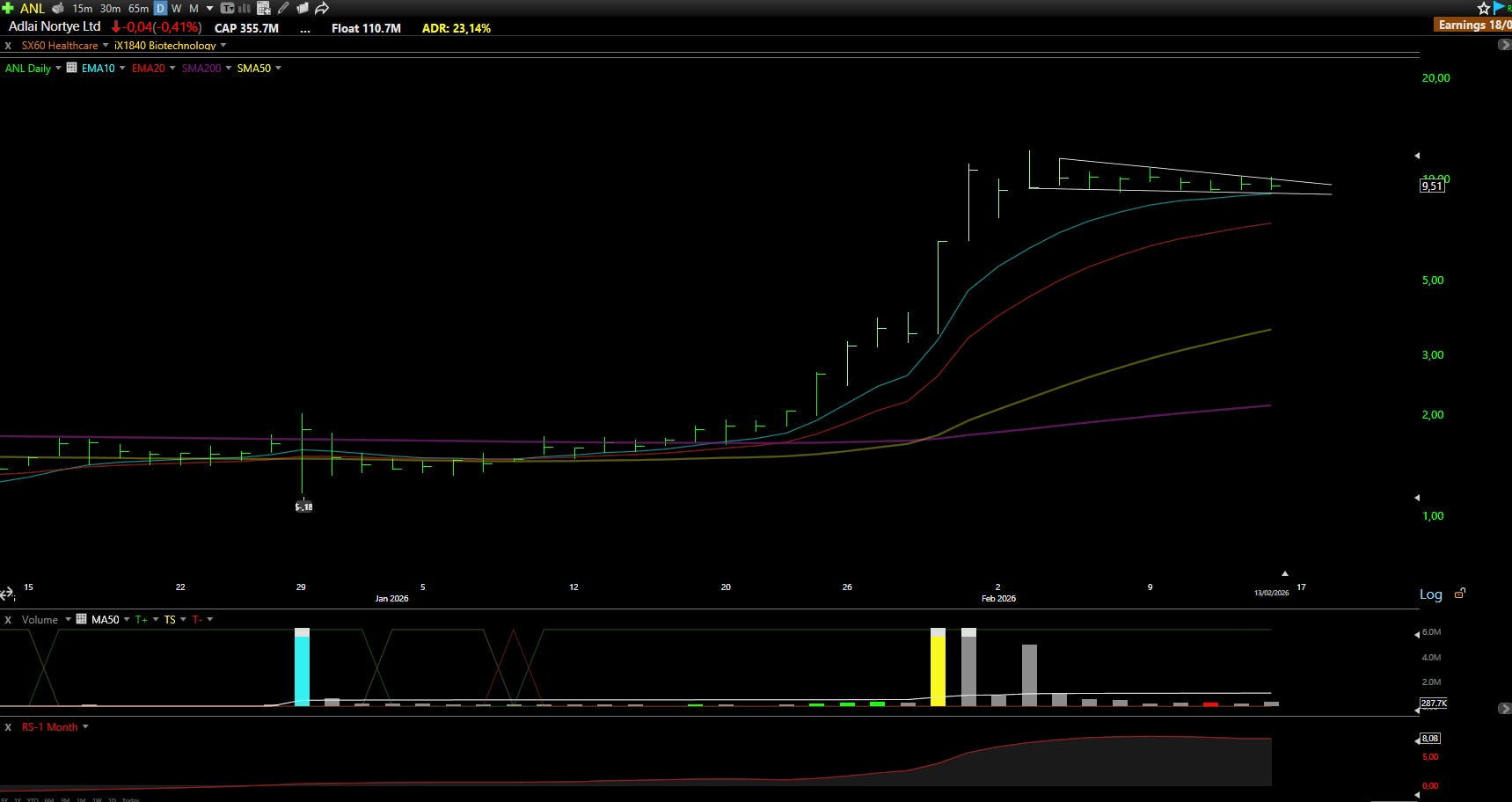
ANL: Adlai Nortye Ltd ⚠️
What they do: A clinical-stage biopharmaceutical company developing targeted oncology therapies, with a focus on pan-RAS inhibitors for difficult-to-treat cancers.
Why watch? The biotech sector has seen renewed interest in RAS-targeted therapies following recent clinical successes in the space. For context, we recently covered Erasca (ERAS) in last week’s watchlist, a company pursuing a similar therapeutic approach. Adlai Nortye is working on comparable science but trades at roughly one-tenth of ERAS’s market capitalization, presenting an intriguing risk-reward dynamic.
The company recently secured a significant vote of confidence from institutional investors, closing a $140 million private placement at $6.50 per share. The investor roster reads like a who’s-who of sophisticated healthcare-focused funds: Cormorant Asset Management, Columbia Threadneedle, Balyasny Asset Management, Point72, and Casdin Capital all participated. For those unfamiliar with these names, these are battle-tested institutional investors with deep expertise in evaluating biotech opportunities: their involvement suggests serious due diligence has been conducted on the underlying science.
The company’s lead asset, AN9025, is a pan-RAS inhibitor that has attracted attention from analysts. Lucid Capital recently initiated coverage with a Buy rating and an $11 price target, citing the potential for significant value creation as clinical data continues to de-risk the asset. While preclinical data appear competitive (potentially best-in-class according to some observers), it’s important to remember that early-stage data doesn’t always translate to clinical success. The path from promising lab results to approved therapy is long and fraught with failure points.
The elephant in the room: Adlai Nortye is a Chinese-domiciled company, which introduces an additional layer of risk that investors must carefully consider. Concerns about accounting transparency, regulatory oversight, and geopolitical tensions have historically weighed on Chinese-listed companies. However, the caliber of institutional investors backing this financing round provides some measure of comfort.
Technical Outlook: The stock is forming a tight flag pattern on progressively declining volume. The average daily range has compressed by nearly half over the past two trading sessions, suggesting accumulation. Support appears solid around the $9.00 level, which has held on multiple tests. While the setup looks good, an additional two to three days of consolidation, or even a final shakeout to test support, would create an even more favorable entry point with tighter risk. This is among the most compressed technical setups in the small-cap biotech space right now, but given the inherent volatility, position sizing should be conservative.
UI: Ubiquiti Inc ⚠️
What they do: A technology company specializing in networking products
Why watch? Ubiquiti operates with an unusual level of opacity; the company provides minimal granular information about its business segments or customer metrics. Despite this lack of transparency, the underlying growth drivers appear robust and multifaceted. The company is benefiting from several tailwinds: accelerating adoption by new customers who can now access products more readily due to improved inventory availability (supply chain constraints had previously limited growth); increased wallet share from existing customers as Ubiquiti expands its product lineup; growing recurring revenue streams from telephony, security, and identity products; and the expansion of its platform to encompass a broader suite of Internet of Things (IoT) devices.
The growth trajectory has been impressive. Ubiquiti has experienced accelerating revenue expansion in recent quarters, and if this momentum can be sustained, the current valuation could quickly become outdated. The most recent earnings report significantly exceeded Wall Street expectations, with revenues surging 35.8% year-over-year to $814.9 million versus the $717 million consensus estimate. Non-GAAP diluted earnings per share reached $3.88, well ahead of the $3.08 forecast. Gross margins expanded to 45.9%, driven by robust demand in both enterprise and service provider segments: a sign of strong pricing power and operational efficiency. The board also declared a $0.80 per share cash dividend, providing income alongside growth.
For context, 35.8% revenue growth for a company of Ubiquiti’s size is exceptional and suggests the business is capturing significant market share or benefiting from structural tailwinds in networking infrastructure demand. The margin expansion is equally impressive, indicating that growth isn’t coming at the expense of profitability.
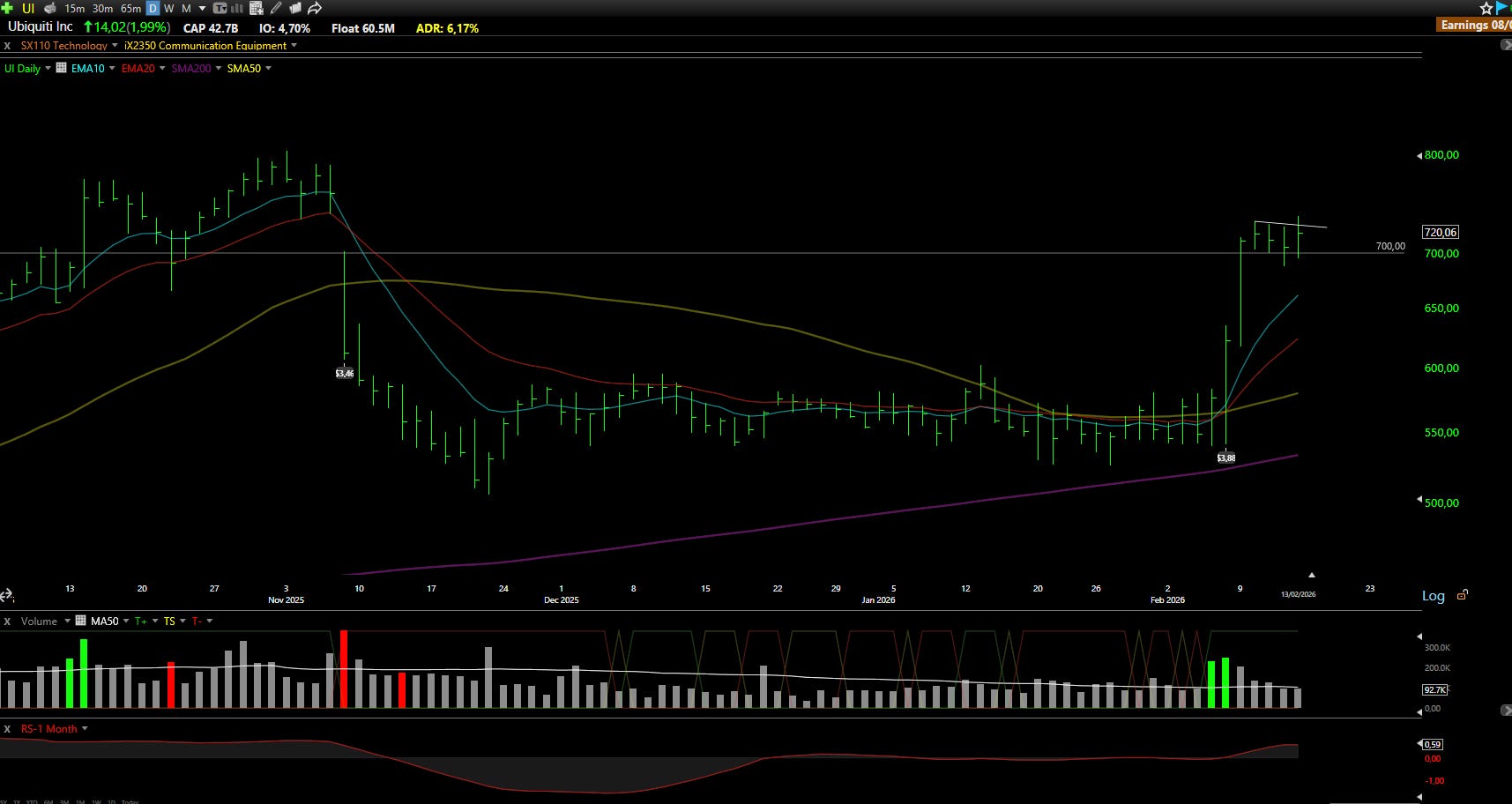
Technical Outlook: Following a three-day, 30% surge after the earnings release, the stock is now consolidating above the key $700.00 level: a psychologically important round number that appears to be acting as support. This consolidation is healthy and necessary after such a rapid move. Ideally, we’d like to see a bit more sideways price action to allow the 10-day and 20-day exponential moving averages to catch up to the current price. This would create a lower-risk entry point with the moving averages providing support. The stock has proven its strength by holding above $700.00; patience for a tighter setup could improve the risk-reward profile before initiating or adding to positions.

Put the market on autopilot, experience the Best Platform with TC2000
Explore now →
LRN: Stride Inc 📊
What they do: A provider of online and blended education programs
Why watch? Following the company’s fiscal second-quarter earnings report, Stride appears to be on a much stronger footing after navigating a challenging period. The business is being buoyed by robust enrollments in its adult and career programs, while technical issues that plagued the K-12 segment have been resolved, stabilizing the overall operation. The stock jumped over 30% following the Q2 print, which could signal the beginning of a sustained rebound rally.
To understand the recent challenges, it’s important to know what went wrong. The company experienced significant technical difficulties stemming from an overly ambitious attempt to integrate multiple third-party technology partners into its platform. These integration issues disrupted operations and weighed on enrollment growth. Management has since resolved these incidents and is taking a more measured, selective approach to third-party partnerships going forward, a lesson learned the hard way, but an important one for long-term operational stability.
With the technical problems behind them and enrollments back on track, investors now have a clearer line of sight to focus on Stride’s fundamental picture. The valuation appears quite reasonable on a bottom-line basis, particularly given the company’s growth prospects. Importantly, the incremental growth is coming from the career learning and technical programs segment, which addresses a significant market opportunity as more adults seek to reskill or upskill in a rapidly changing job market.
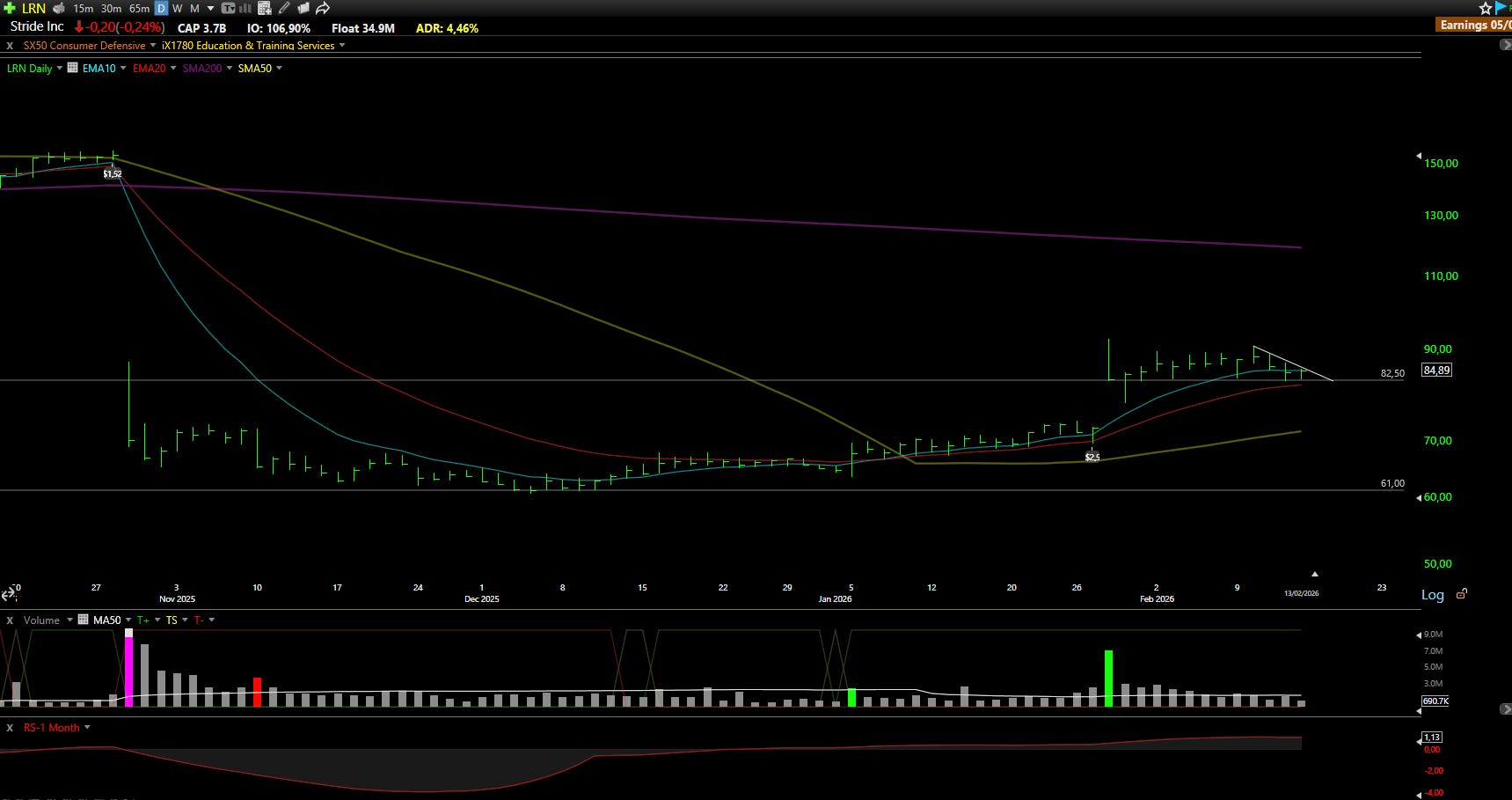
Technical Outlook: The stock has been consolidating since the earnings announcement and is now testing the key $82.50 level for multiple times during this consolidation phase. This level is particularly significant because it represents the low of the gap-up day following earnings: a critical support zone. The 10-day and 20-day exponential moving averages are both supporting the stock, creating a favorable confluence of technical factors. When multiple support levels align at the same price point, it increases the probability that the level will hold. This setup offers a defined risk point: a break below $82.50 would invalidate the bullish thesis, while a hold and bounce from this level could set up the next leg higher with a tight stop-loss.
CMTL: Comtech Telecommunications Corp ⚠️
What they do: A defense technology company specializing in advanced satellite communications systems
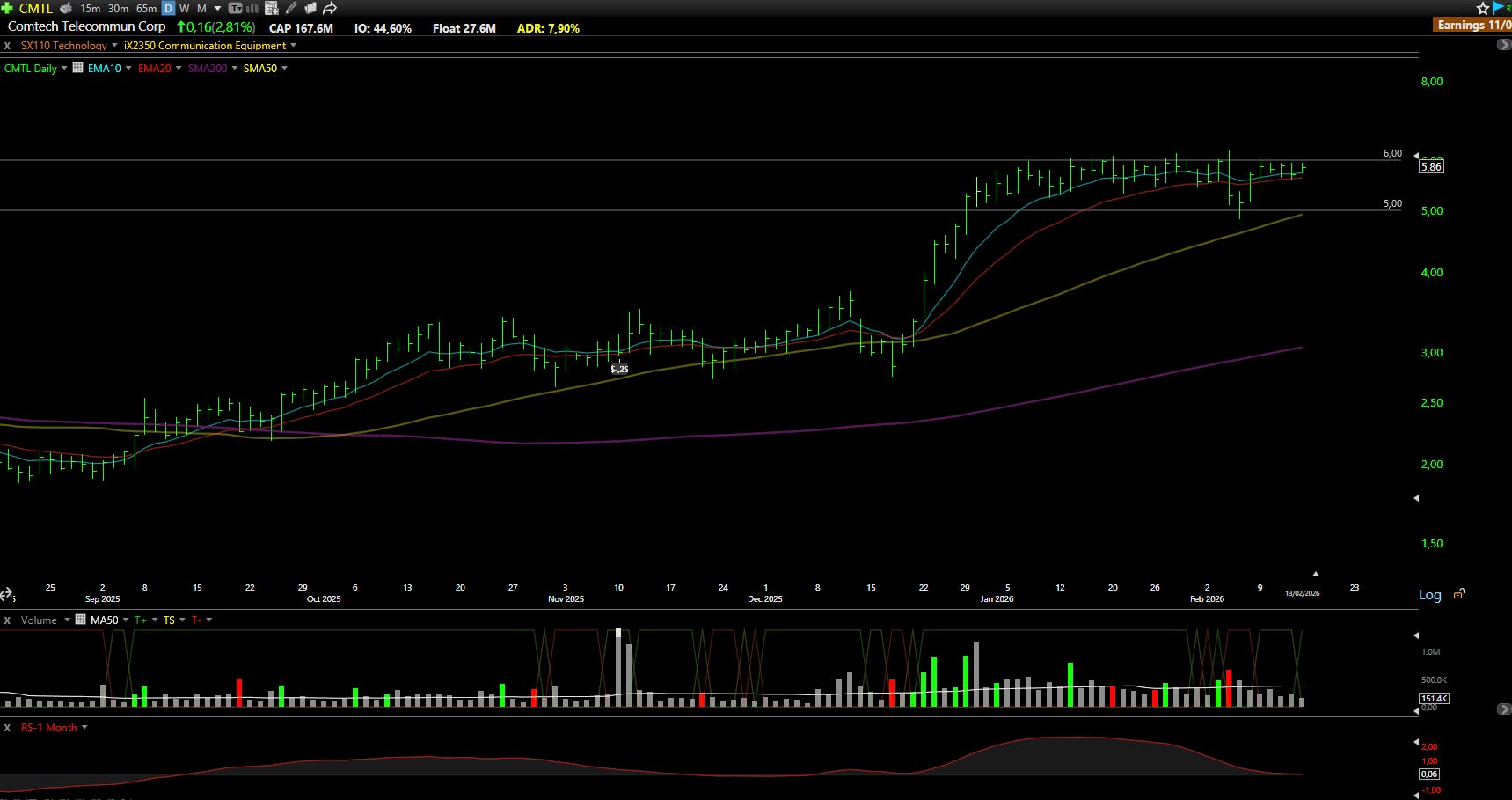
Why watch? The market appears to be significantly undervaluing Comtech Telecommunications at its current $150 million market capitalization. Our analysis suggests the company’s restructured Space & Satellite division alone could be worth approximately $500 million. Throughout 2025, Comtech underwent a comprehensive transformation, including facility consolidation, leadership changes, and strategic portfolio optimization focused on higher-margin defense products. The company’s flagship COMET troposcatter system represents a breakthrough in battlefield communications: it’s the world’s most compact and portable over-the-horizon platform, capable of deployment in just 15 minutes compared to hours for competing systems. With an operational range exceeding 25 miles and enhanced performance in adverse weather conditions (unlike satellite or other alternatives), COMET has proven itself in real combat environments. In March 2025, Comtech secured $26 million in sole-source follow-on contracts from L3Harris for the Anti-Jam Modem (A3M) program, which provides software-defined, anti-jamming capabilities for U.S. satellite communications and tactical satellite networks. Perhaps the most overlooked catalyst is Comtech’s position as a qualified supplier for Amazon’s Project LEO ground station gateways (formerly Project Kuiper), which has entered an accelerated deployment phase. Industry speculation about Comtech’s involvement dates back to 2020, but the market has largely ignored this potential revenue stream as the project scales commercially.
Technical Outlook: CMTL has been consolidating in a tight range between $5.00 and $6.00 since late December, forming what technical analysts call a Darvas box pattern. The stock has recently found support at both the 10-day and 20-day exponential moving averages, which are trending upward: a positive sign of accumulation. The $6.00 level is clearly the critical resistance to watch, representing a significant technical barrier on both daily and weekly charts. A breakout above this level on strong volume could trigger the next leg higher and potentially begin to close the valuation gap between the current market cap and the underlying asset value.
PRLB: Proto Labs Inc 📊
What they do: A pioneer in manufacturing-as-a-service, providing on-demand digital manufacturing solutions
Why watch? Proto Labs has carved out a unique position in the manufacturing landscape by enabling customers to avoid the traditional challenges of production: overstocking, shortages, long lead times, and design limitations. The company’s digital platform allows for rapid production and delivery, while its 3D printing capabilities enable design complexity that would be impossible or prohibitively expensive with conventional manufacturing methods. Proto Labs serves more than 50,000 clients across diverse end markets, providing a complete portfolio of manufacturing technologies.
The company’s revenue trends had stalled in recent years, leading to a significant valuation de-rating as investors lost confidence in the growth story. However, recent quarters indicate a potential inflection point. A new CEO who started recently has driven double-digit revenue growth, suggesting a successful turnaround may be underway.
The most recent earnings report was particularly encouraging. Proto Labs delivered record fourth-quarter revenue of $136.5 million, up 11% year-over-year in constant currency, and full-year revenue of $533.1 millio, marking the company’s strongest organic growth since 2018. U.S. revenue grew while European operations declined, indicating geographic divergence that management will need to address.
The growth was driven by exceptional demand for CNC machining and sheet metal fabrication, which powered double-digit expansion. U.S. CNC revenue was up approximately 25% for the full year and roughly 35% in the fourth quarter alone, a remarkable acceleration. Meanwhile, injection molding and plastic 3D printing saw modest declines, suggesting a shift in customer demand toward metal-based manufacturing solutions.
From a financial health perspective, the company generated $74.5 million in operating cash flow, returned $43 million to shareholders via buybacks, and ended the year with $142.4 million in cash and zero debt: a fortress balance sheet that provides flexibility. The company’s end markets include high-growth sectors such as drones, space exploration, satellites, and data centers, all areas experiencing structural tailwinds.
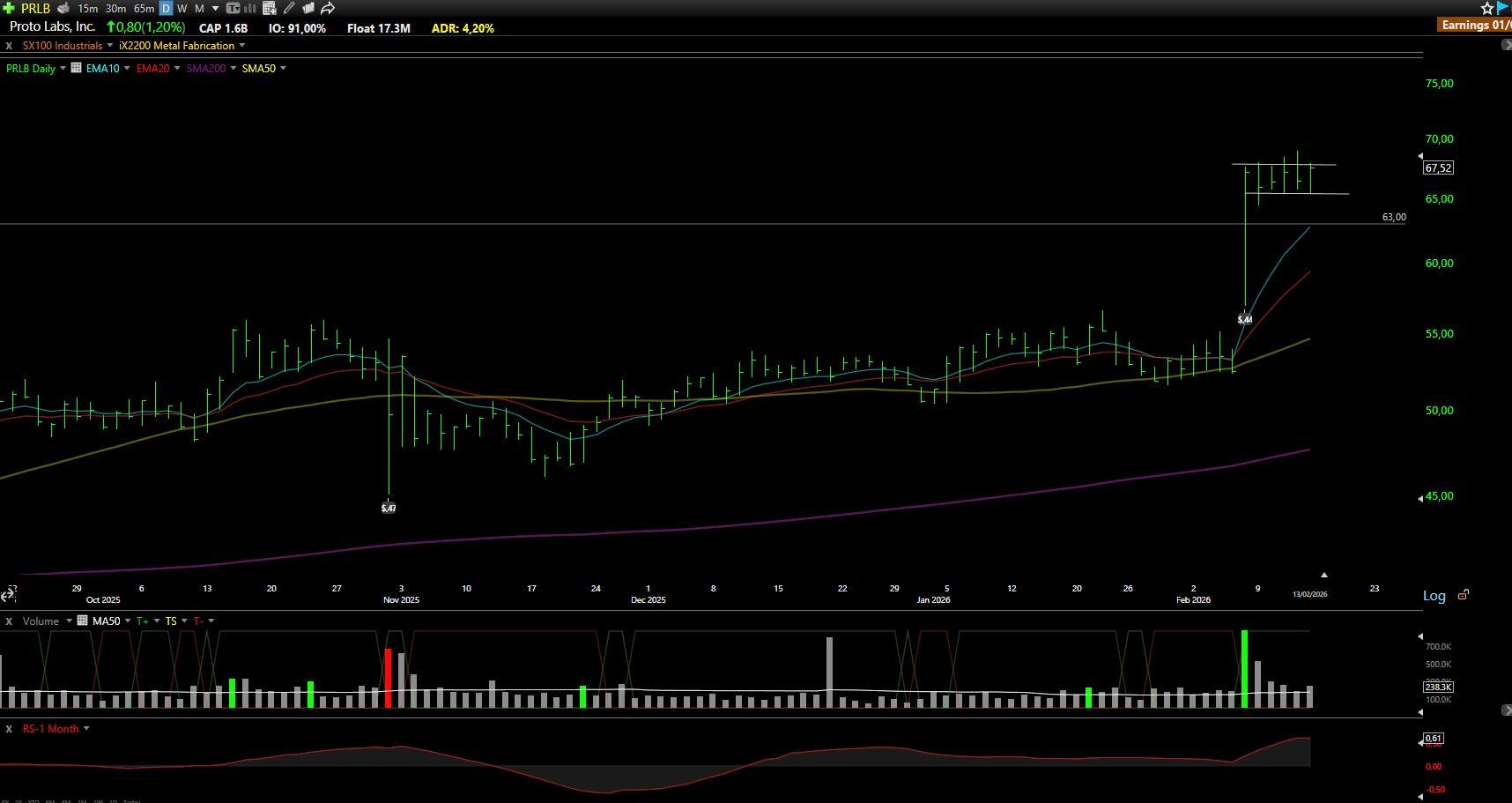
Technical Outlook: The stock recently broke through a key long-term resistance level and is now consolidating in a tight Darvas box. As with other names we’ve discussed, additional consolidation would be preferable to increase the probability of a successful continuation move. One important caveat: Proto Labs is not a highly liquid stock, which means the bid-ask spread can be wide, and slippage on orders can be significant. If you’re interested in building a position, use limit orders, be patient with fills, and consider scaling in over time rather than entering all at once. The technical setup is constructive, but the liquidity constraints require additional caution and potentially smaller position sizing than you might use on a more liquid name.
CHTR: Charter Communications 📊
What they do: A leading U.S. broadband connectivity provider
Why watch? With continued market volatility, we’re seeking names that aren’t extended and can provide value in sectors that may not be as fashionable as artificial intelligence but where hidden gems can be found. Charter Communications fits this profile.
The company has undergone a significant strategic pivot, moving away from being a traditional cable provider to becoming a fully converged connectivity service provider. This transformation includes leveraging a “mobile first” broadband strategy to defend against competitive threats from fiber providers and fixed wireless alternatives offered by telecom companies. The strategy appears to be working: internet subscriber losses have moderated in recent quarters, while the company continues to see strong growth in mobile lines, a critical metric as mobile becomes an increasingly important part of the bundle.
One notable aspect of Charter’s capital allocation strategy is its approach to shareholder returns. While the company doesn’t pay a dividend, it more than compensates through very robust share repurchase programs. Over the past five years alone, Charter has reduced its outstanding share count by over 30%, a massive reduction. For investors, this aggressive buyback program effectively functions as a tax-efficient return of capital.
The broadband infrastructure business may not generate headlines, but it provides essential connectivity that underpins the digital economy. As work-from-home arrangements persist, streaming continues to grow, and bandwidth demands increase, Charter’s infrastructure becomes more valuable. The valuation appears reasonable given the cash flow generation and capital return profile.
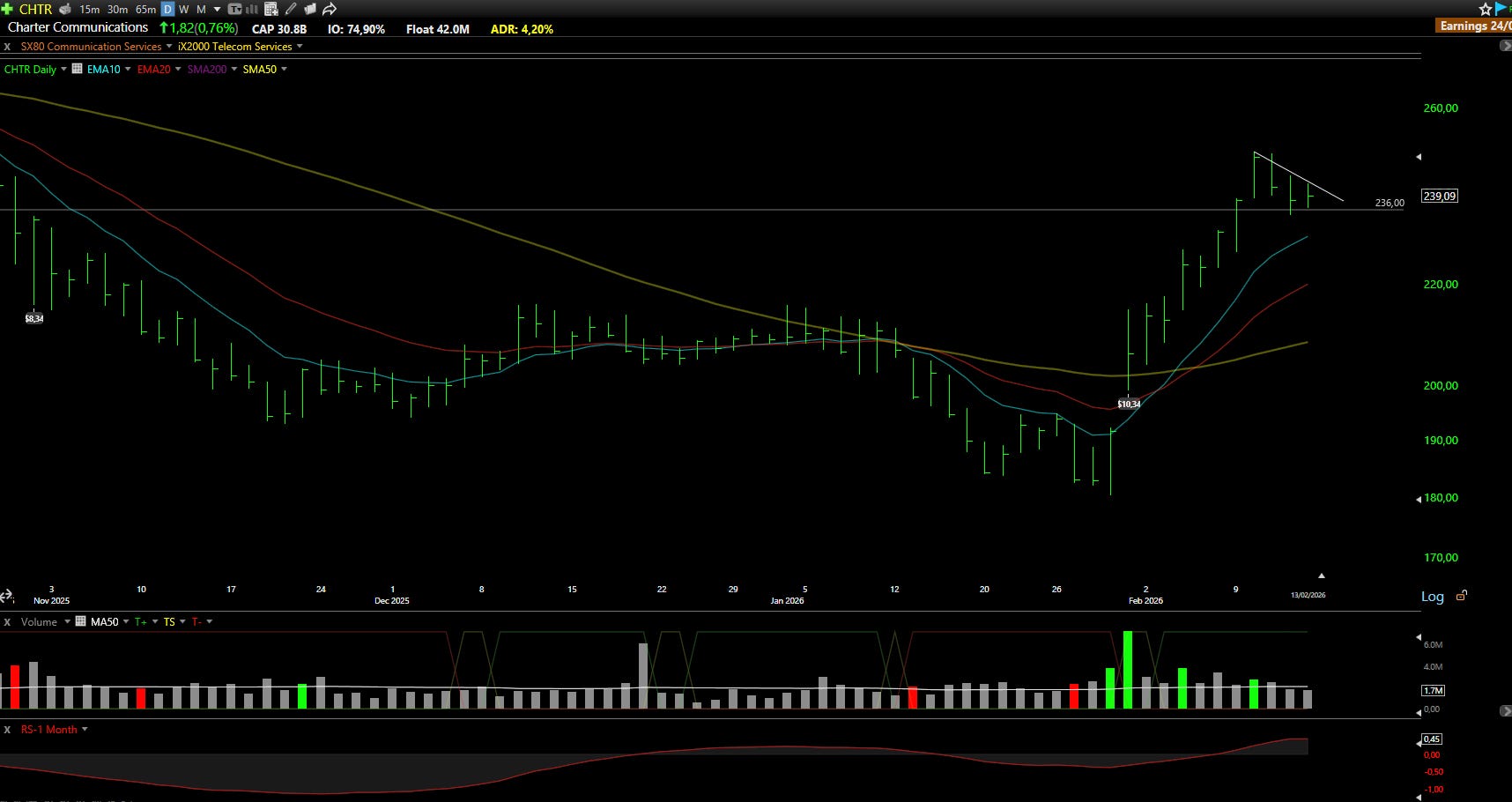
Technical Outlook: The chart setup is constructive but requires patience. The stock is working through a consolidation phase and needs to establish a clear base before the next move higher. Given the defensive nature of the business and the ongoing buyback program, this is a name that can be accumulated on weakness rather than chased on strength. Look for support at key moving averages and consider building a position over time rather than attempting to time a perfect entry.
GIS: General Mills Inc 🛡️
What they do: A multinational manufacturer and marketer of branded consumer foods
Why watch? General Mills has laid out clear strategic priorities that make sense given the challenges the company currently faces. The priority (returning North America Retail to volume growth) is obviously crucial. This segment is their largest by a considerable margin, and reversing volume declines is essential for overall business health. The second priority is to accelerate Pet growth, which has been their strongest segment by organic net sales growth. Doubling down on momentum makes strategic sense. The third priority focuses on driving operational efficiencies, which is critical given recent margin pressure.
There’s no question that General Mills is experiencing significant pain right now due to the macro environment and tariff headwinds. Consumer packaged goods companies are caught between rising input costs and consumers who are increasingly price-sensitive and trading down to private label alternatives. However, the current valuation appears to offer a notable opportunity for patient investors. As we move through 2026, if economic uncertainty persists or increases, investors may rotate back into quality defensive names like General Mills that offer stability, dividends, and exposure to non-discretionary spending.
The company’s brand portfolio remains strong, and food consumption is relatively inelastic: people need to eat regardless of economic conditions. While growth may be muted, the dividend yield and defensive characteristics make General Mills an attractive holding during periods of market stress.
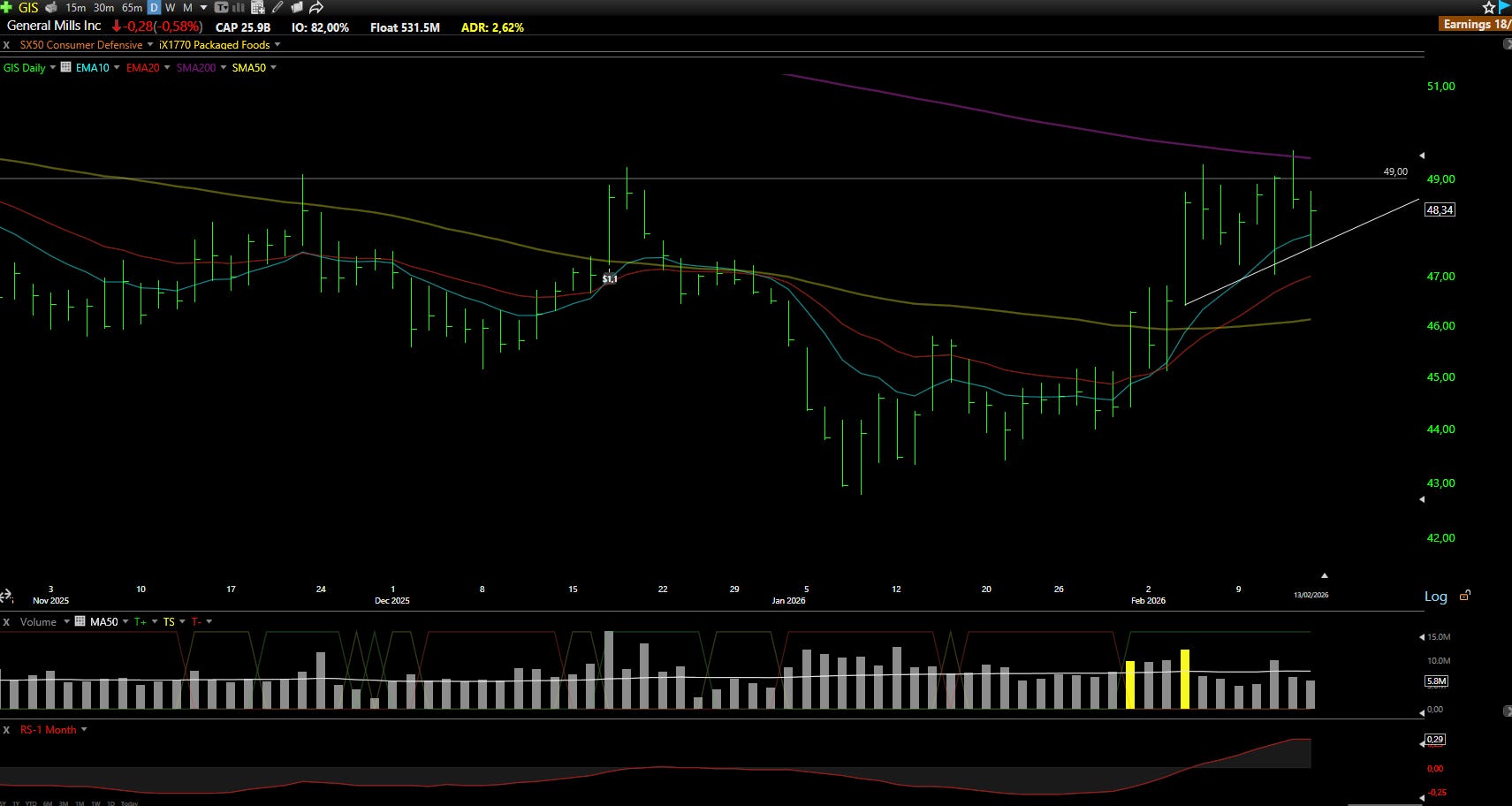
Technical Outlook: The stock appears to have found a bottom near the $43.00 level and has completed a cup formation. It has attempted to clear the $49.00 resistance level a couple of times recently without success. This $49.00 level is particularly significant; it represents a major resistance zone on both the weekly and monthly charts and roughly coincides with the 200-day simple moving average, the last major moving average providing resistance to the stock. A clean break above $49.00 with volume would be a significant technical development, potentially signaling the beginning of a sustained uptrend. Until that break occurs, the stock remains range-bound, but the risk-reward becomes increasingly favorable as the stock holds support and builds energy for the next move.
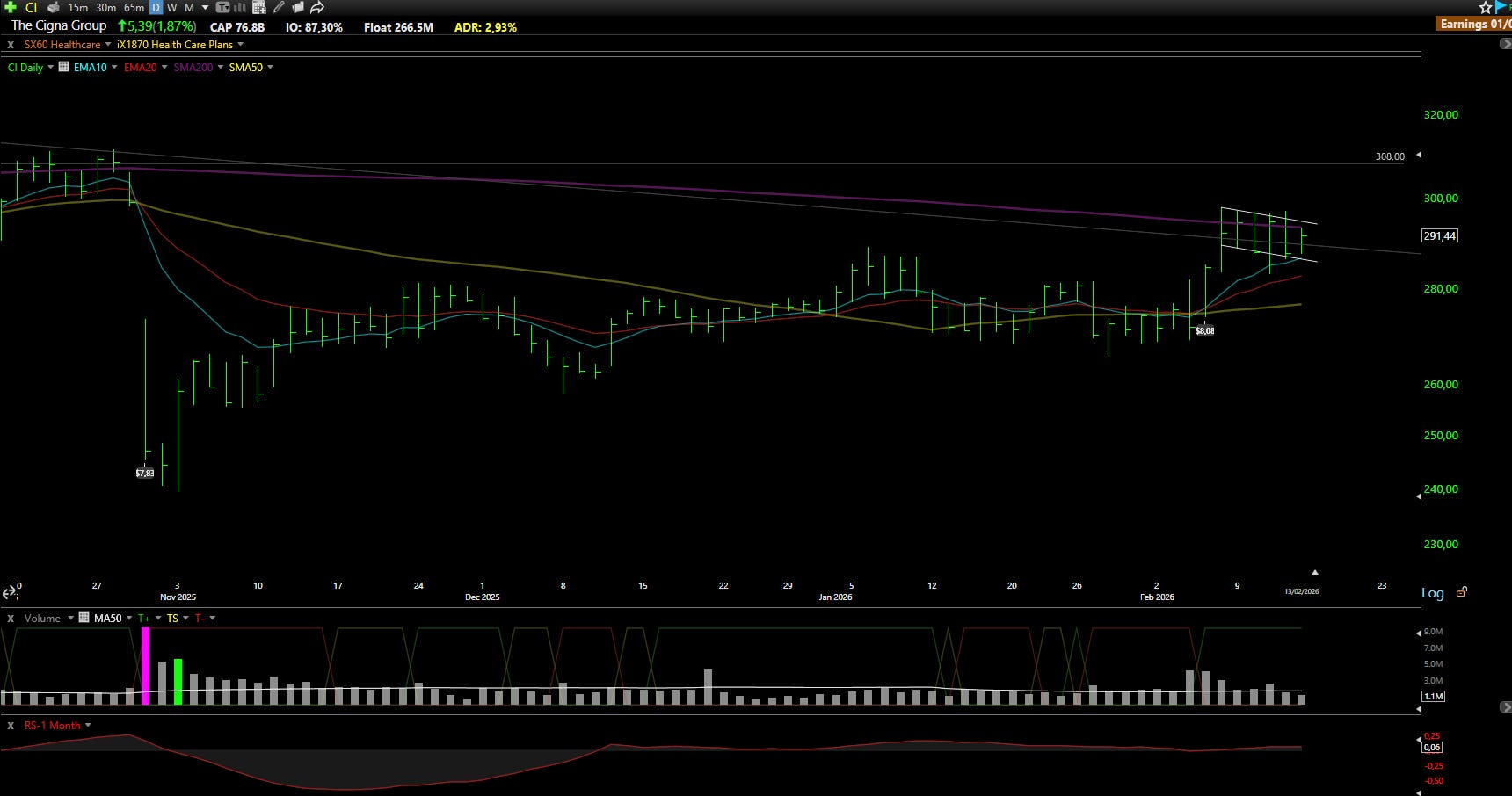
CI: The Cigna Group 🛡️
What they do: A global health services company
Why watch? The Cigna Group is a critical infrastructure for the American healthcare system, touching nearly 180 million customer relationships. The company recently announced the launch of a new rebate-free model for pharmacy benefits, a significant strategic shift. This improved transparency for consumers, combined with average savings on brand-name prescriptions of approximately 30%, should alleviate much of the regulatory scrutiny that has weighed on Cigna and other pharmacy benefit managers. The results of this initiative should become visible over the next few quarters and could be a meaningful catalyst if execution is successful.
Beyond the near-term noise, Cigna’s long-term story remains arguably intact. The U.S. population is living longer and growing older, driving increased healthcare utilization. Specialty and biosimilar drugs are growing in prevalence, creating opportunities for Cigna’s pharmacy benefit management business to capture value through formulary management and cost optimization. These are tangible, structural, long-term catalysts for the company. Management anticipates returning to its 10%+ annual adjusted earnings per share growth target in 2027 and beyond.
From a valuation perspective, Cigna appears cheap. The company delivered strong earnings results with $275 billion in adjusted revenue (up 11%) and $29.84 in adjusted earnings per share (up 9%). The company did record a fourth-quarter after-tax special charge of $483 million, or $1.82 per share, which investors should note, but the underlying operational performance remains solid.
Technical Outlook: The stock is currently battling with a significant downtrend line from the weekly chart (shown in grey), but is consolidating above it, which is a constructive development. The 200-day simple moving average is also creating resistance and must be cleared for the stock to begin a sustained advance. If Cigna can break through these technical barriers, the next upside targets would be in the $308.00–$312.00 range, where weekly resistance levels reside. The setup requires patience, but a clean break above resistance with volume could trigger a significant move higher.
These tickers below didn’t make the main cut, but they’re on our radar for a reason. We’ve vetted them; now you decide if they fit your game.
More opportunities, less noise.
⚡📋Scanned Stocks: Quick Picks
XPOF - Xponential Fitness Inc
EGHT - 8x8 Inc
DRTS - Alpha Tau Medical Ltd
SPB - Spectrum Brands Holdings Inc
WULF - TeraWulf Inc
"Owning stocks is like having children – don’t get involved with more than you can handle."
Peter Lynch
Disclaimer: This analysis is for informational purposes only and should not be considered financial advice. Always conduct your research and consult with a licensed financial advisor before making investment decisions.