


When Gods Bleed: The Silver Massacre and What It Means When You Think "This Time Is Different"
Friday hit like a freight train with no brakes.
Gold and silver—those ancient stores of value, those supposed hedges against the madness, those metals that every doomsday prepper and macro tourist had been piling into like it was the last lifeboat off the Titanic—got absolutely slaughtered. We’re talking one of the sharpest single-day declines in decades. The kind of move that makes grown men check their accounts twice because surely, surely the screen is lying.
Just twenty-four hours earlier, both metals had kissed record highs. Everyone was a genius. The trade was “obvious.” Inflation hedge, they said. Monetary debasement, they said. Trump’s Fed pick means easy money forever, they said.
Then Kevin Warsh got the nod for Fed Chair, and the narrative flipped faster than a line cook flipping omelettes on a Sunday brunch rush.
Policy expectations shifted.
Sentiment turned.
And the crowd that had been screaming “to the moon” suddenly found itself holding bags of burning metal, watching their accounts bleed out in real time.
The Mechanics of a Massacre
Let me walk you through what actually happened, because the mechanics matter. This wasn’t some orderly retreat, some gentlemanly repositioning of capital.
This was a stampede.
A full-blown, trampling-over-your-grandmother-to-get-to-the-exit panic.
Silver (beautiful, volatile, treacherous silver) is a leveraged beast. The futures market is thin, the liquidity shallow compared to its golden cousin. When prices started breaking through key technical levels, the algorithms woke up. Stop-losses triggered. Margin calls came screaming through like artillery fire. Traders who’d been riding high on 10x, 20x leverage suddenly found themselves liquidating positions they didn’t want to liquidate, at prices that made them physically ill.
The momentum systems (those soulless, emotionless trading bots) smelled blood and piled on. What started as profit-taking turned into a cascade, a waterfall, a goddamn avalanche of selling that rolled across every exchange from New York to Shanghai.
Silver dropped almost 30% in a single day. Let that sink in. If you were long and leveraged, you didn’t just lose money.
You got erased.

There’s a quote that explains everything better than I ever could:
“The investor who says, ‘This time is different,’ when in fact it’s virtually a repeat of an earlier situation, has uttered among the four most costly words in the annals of investing.”
People piled into metals, thinking they’d found the golden escalator to the moon. They ignored every warning sign, every historical precedent, every flashing red light that screamed “PARABOLIC MOVE AHEAD: DANGER.”
Because this time, they told themselves, it really was different.
It never is.
Human behavior doesn’t change. Greed looks the same in 1929 as it does in 2026. Fear smells the same whether you’re wearing a top hat or a hoodie. The chart goes vertical, everyone convinces themselves they’re geniuses, and then gravity remembers how to work.
Every. Single. Time.
Timing Is Everything (And Nearly Impossible)
Here’s the part where I tell you the truth, the uncomfortable, ego-bruising truth that most people in this business won’t admit: timing this trade was almost impossible.
We tried. Our trading desk had been watching silver like a hawk watches a field mouse. We saw it climb higher than anyone thought possible. We saw the fake exhaustion candle on January 26th (the kind of move that usually signals the top) and then watched in disbelief as it pushed even higher before finally collapsing when the market was closed.
How do you trade that? How do you position for a move that defies logic, fakes you out, and then implodes during off-hours?
On our swing portfolio, we tried to start a position in ZSL (a leveraged inverse silver ETF) at the beginning of the week. Our stop was at $1.50. The low hit $1.44. We got stopped out and watched from the sidelines as it ripped 65% in one day.
That’s the game. Even professionals who do this for a living, who’ve seen every trick and trap the market can throw, get humbled.
We study these moves not because we nailed them, but because we need to understand them for next time.
You need to have a big, expansive, almost delusional imagination about what’s possible. Because the magnitude of moves we’re seeing now (the sheer violence and velocity) is increasing. The liquidity is deeper, the leverage is higher, the algorithms are faster. What used to take weeks now happens in hours.
If you can’t imagine silver dropping 30% in a day, you won’t be prepared when it does. If you can’t imagine a “safe haven” turning into a killing field, you’ll be the one getting carried out on a stretcher.
What This Means for You
You just need to understand the game.
You need to know that when everyone’s piling into something because “it can only go up,” that’s exactly when you should be looking for the exits. You need to respect leverage like you’d respect a loaded gun.
You need to define your risk before you enter the trade, not after.
And most importantly, you need to remember that the market doesn’t care about your feelings, your mortgage, or your retirement plan.
It will take everything you have and then send you a bill for the privilege.
But if you approach it with humility, with discipline, with the understanding that you’re going to be wrong sometimes (maybe even most of the time), you can survive. And if you survive long enough, you might even thrive.
The silver massacre was a lesson. The question is: are you paying attention?


Latest articles:


Each stock carries a risk badge: ⚠️ High | 📊 Medium | 🛡️ Low.
Based on volatility, float, technicals, and fundamentals. Size your positions accordingly.
📈 Free Setup: Make It Count
CRVS: Corvus Pharmaceuticals Inc⚠️
What they do: A clinical-stage biopharmaceutical company
Why watch? Corvus has emerged as a compelling story in the biotech space following breakthrough Phase 1 data for its lead asset, soquelitinib, an oral ITK inhibitor being developed for moderate-to-severe atopic dermatitis (AD). The company recently reported highly positive results from cohort 4 of its early-stage study, demonstrating the drug’s potential to become a leading oral treatment option for AD patients. For context, atopic dermatitis is a chronic inflammatory skin condition affecting millions, and the current treatment landscape remains fragmented with significant unmet needs, particularly for oral therapies that can offer convenient, effective alternatives to injectable biologics.
What makes this particularly interesting is the dual-purpose nature of ITK inhibition: the same mechanism can target both immune-mediated disorders and certain cancers. This gives Corvus an expansive runway to pursue multiple indications with soquelitinib, potentially unlocking significant value across therapeutic areas. The market clearly recognized this potential: following the positive data announcement, the company successfully closed an upsized public offering at $22.15 per share, raising approximately $201 million in gross proceeds. This capital infusion provides a substantial runway to advance clinical programs and positions the company well for the next stages of development.
The biotech sector has been volatile, but Corvus is demonstrating exceptional relative strength even as broader markets have experienced selling pressure and choppiness. The company’s ability to raise capital at a premium and maintain investor confidence speaks to the quality of its clinical data and the commercial opportunity ahead.
Technical Outlook: The chart structure here is encouraging. Following the offering, shares have pulled back on notably low volume, a healthy sign that suggests profit-taking rather than fundamental concerns. The stock is now approaching its rising 10-day exponential moving average, which has historically provided support during this uptrend. The key level to monitor is $20.00, which has acted as a floor on the daily chart and represents a clear line in the sand for risk management. Above that, $22.00 marks the breakout level that could trigger the next leg higher. Ideally, we’d like to see another day or two of consolidation, or even a brief shakeout below $20.00 to flush out weak hands, before the stock resumes its upward trajectory. The risk-reward setup appears favorable for patient investors willing to wait for the right entry.

Why We Don’t Wait for Sunday
Markets don’t move on your schedule. The best low-risk entries don’t announce themselves politely and wait for the weekend newsletter.
They show up when they show up. And if you’re not positioned, you miss them.
Paid members get real-time alerts: exact entries, stops, position sizing, and the thesis behind every trade. The same information we use to manage our own capital.
Free members get just one pick on Sunday.
Does that sound like an edge to you?
What’s Inside Premium
📊 Watchlist Elite (7-9 Stocks)
Each selection undergoes rigorous financial analysis, technical evaluation, and strategic assessment.
💼 Full Portfolio Transparency
Every position we hold. Entry price. Current P&L. Stop level. Real money, real risk.
⚡ Real-Time Trade Alerts (Chat Access)
This is where the edge lives. Exact entries, stops, and position sizing. Real-time. No lag
🎯 Quick Picks (5 Names)
Additional setups that just missed our main criteria but are worth watching.
💬 Chat Access
See our thought process in real time. Ask questions. Watch how we manage risk.
🛠️ The Tools We Actually Use
Member discounts on TC2000, Fiscal.ai, and other platforms. Same tools, better pricing.
What Paid Members Say:
We’re entrepreneurs first, traders second. We’ve sat in the CEO chair. We know what real execution looks like and how to spot it.
€39/month or 299€/year. Less than one losing trade. Cancel anytime.
Portfolio updates and new positions:
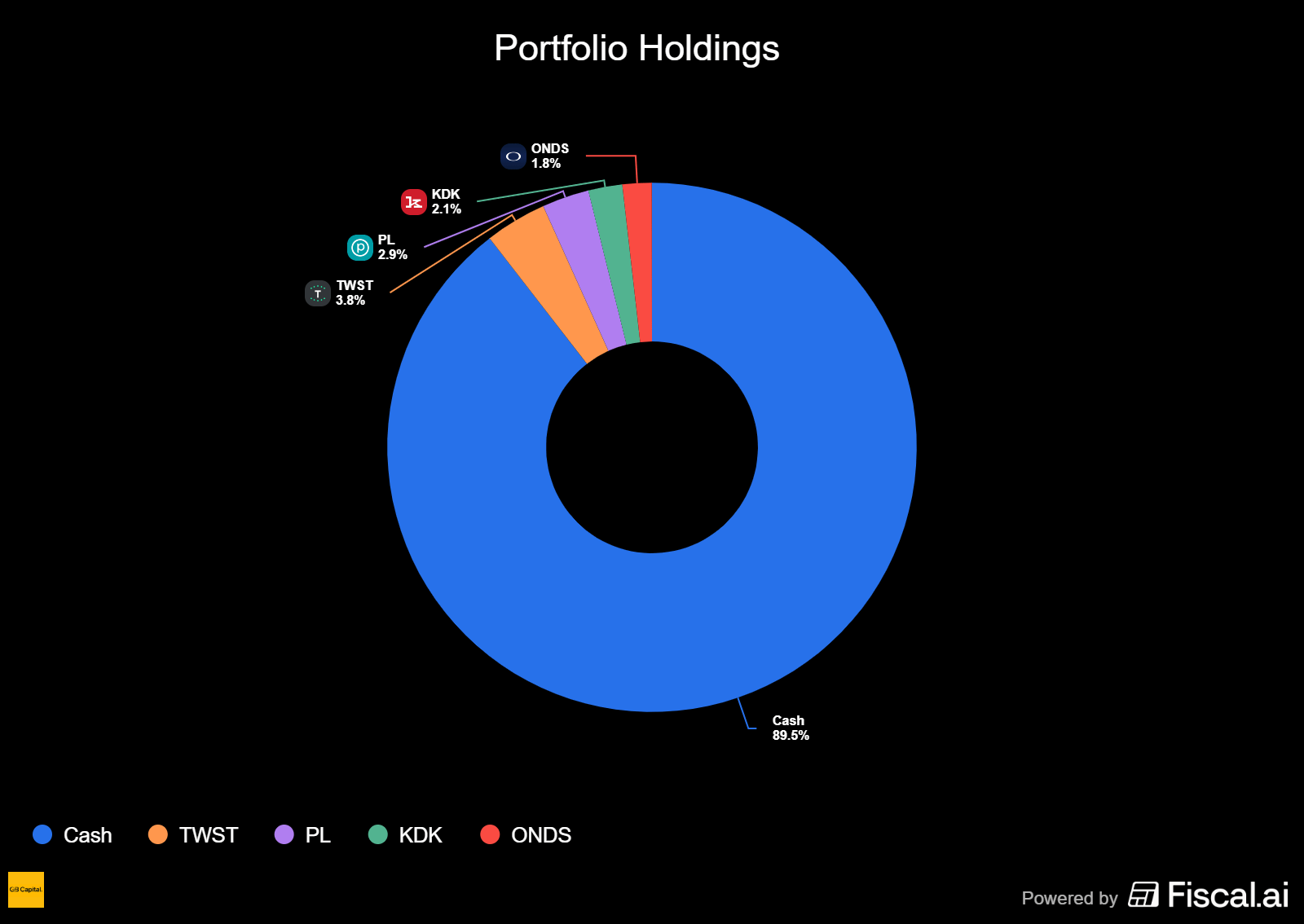
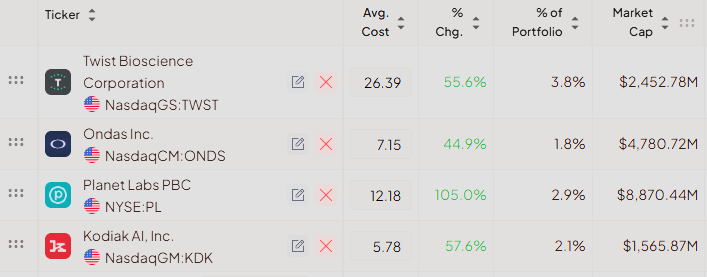

⚡ AI-optimized, human-verified: Our expert team carefully selected Premium market intelligence from Fiscal.ai data. Explore now →
💎📈 Watchlist Elite: Premium Market Movers
ERAS: Erasca Inc ⚠️
What they do: An oncology-focused biotech company
Why watch? The oncology sector received a significant catalyst in early January when reports surfaced that AbbVie was nearing a deal to acquire Revolution Medicines for approximately $20 billion or more, a substantial premium to its then-market value of around $16 billion. While deal talks can always fall apart, the mere prospect of such a transaction validated the commercial potential of RAS-targeted therapies and sparked a broad rally across the oncology space. Erasca has been one of the primary beneficiaries of this sector rotation.
The company represents a high-conviction “pan-RAS” pure play, recently bolstered by promising Phase 1 data for ERAS-0015 that demonstrated early clinical efficacy and confirmed responses across multiple RAS-mutant solid tumors. For investors unfamiliar with the science: RAS mutations are among the most common genetic drivers of cancer, yet have historically been considered “undruggable.” Recent breakthroughs have changed that calculus, and companies that can successfully target RAS stand to capture a multi-billion dollar market opportunity. Erasca is positioning itself at the forefront of this next wave of precision oncology.
Following the sector enthusiasm, Erasca capitalized on favorable market conditions by closing an upsized public offering on January 23rd at $10.00 per share. The company now has a robust cash runway extending into 2028, providing ample resources to advance its pipeline without near-term dilution concerns. Importantly, two major monotherapy data readouts are expected in 2026 for ERAS-0015 and ERAS-4001, which should serve as significant value inflection points.
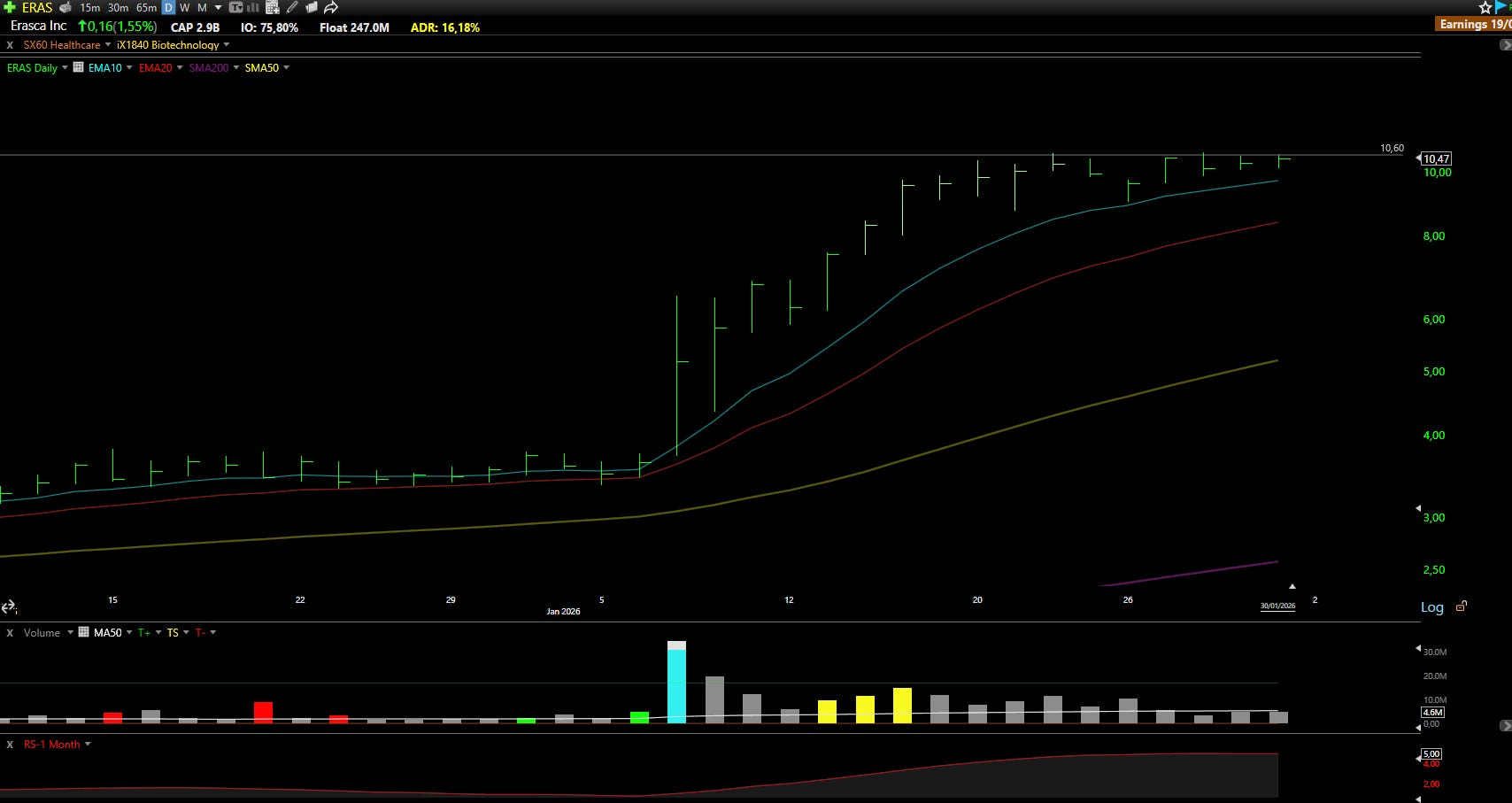
Technical Outlook: The chart structure is textbook: exactly the kind of clean, linear setup that tends to work well for momentum traders. Even after the offering, shares have held firm and are riding the 10-day exponential moving average beautifully. This type of disciplined price action suggests strong underlying demand and institutional accumulation. The current line in the sand appears to be $10.60, which should serve as support for the next leg higher. Ideally, we’d like to see a bit more consolidation at these levels to build a stronger base before the stock attempts to break out. The technical setup, combined with upcoming clinical catalysts, makes this an attractive risk-reward opportunity in the biotech space.
MCRP: Micropolis AI Robotics ⚠️
What they do: A developer of autonomous mobile robots (AMRs)
Why watch? Why watch? Full transparency: this is a speculative play without the fundamental depth of our typical coverage. However, sometimes the market rewards momentum and relative strength regardless of traditional metrics, and Micropolis is exhibiting both. The company recently showcased its technology at the UMEX 2026 exhibition in Abu Dhabi on the stand of EDGE Group, demonstrating a fully autonomous, heavy-duty industrial logistics robot built on its M01 platform. The robot is designed for controlled industrial environments, including manufacturing facilities, industrial zones, and logistics corridors, applications where automation is increasingly becoming a necessity.
What caught our attention is the exceptional relative strength the stock has shown recently, even as broader markets have struggled. We’ve seen similar behavior in KDK (already in our portfolio), which operates in the same low-cap robotics sector. These small-cap names can occasionally generate outsized moves even when major indices are in downtrends, as niche themes and momentum can override broader market sentiment.
To be clear: this isn’t our highest-conviction setup, and the company lacks the earnings visibility and institutional backing we typically prefer. But it’s worth having on your radar as a potential momentum play. Small-cap robotics names can move violently on relatively light volume, and if the sector continues to attract speculative interest, Micropolis could be a beneficiary.
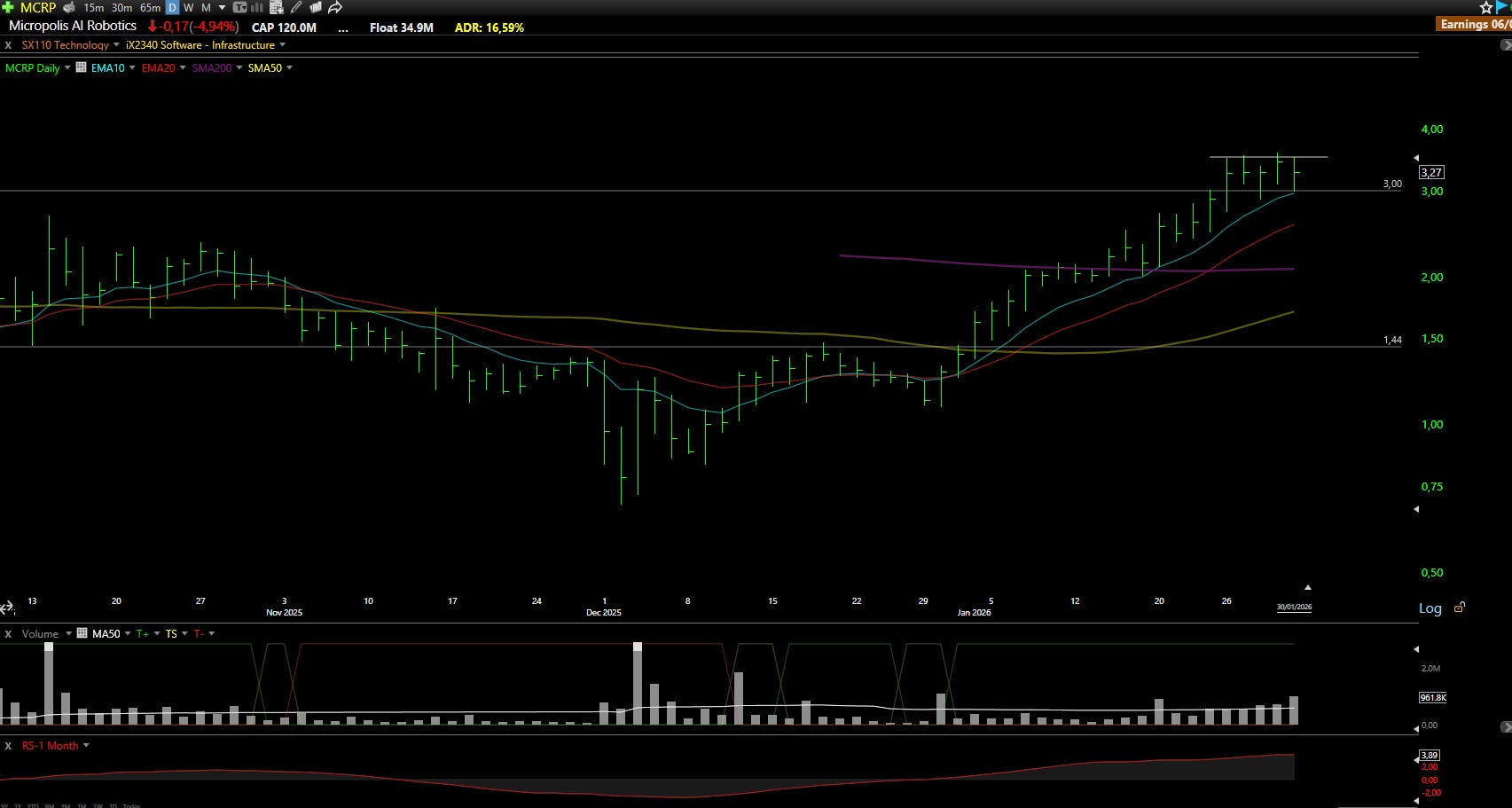
Technical Outlook: The consolidation above $3.00 is the key feature here. As long as that level holds, the stock maintains its structural integrity. The 10-day exponential moving average continues to provide support, and volume has been drying up during this consolidation, often a precursor to the next directional move. This is a watch-and-wait situation: if the stock can hold support and begin to tighten further, it could set up for a momentum-driven breakout. Manage risk carefully and size positions accordingly, given the speculative nature of this play.

Put the market on autopilot, experience the Best Platform with TC2000
Explore now →
SHMD: SCHMID Group NV ⚠️
What they do: A technology equipment provider specializing in tooling solutions
Why watch? This company is a hidden gem: one of the most overlooked technology enablers in the semiconductor supply chain. SCHMID is quietly positioning itself as a go-to player in one of the biggest behind-the-scenes shifts in chip design: the transition to glass substrates. For those unfamiliar with the technical details, here’s the simplified version: today’s most powerful chips are increasingly made up of multiple smaller chips (called chiplets) stitched together on a base layer called a substrate, similar to a circuit board. Traditionally, these substrates are made from resin or silicon, but that approach is hitting physical limitations.
The problem is straightforward: as chipmakers try to pack more chiplets together to meet surging demand for computing power, traditional substrates start to warp or overheat. Glass substrates solve this problem: they’re perfectly flat, handle heat better, and can support higher-density designs. As artificial intelligence and high-performance computing continue to drive demand for more powerful chips, the substrate bottleneck is becoming increasingly critical. SCHMID is rare in that it’s a full-stack tool provider for both glass and organic substrates, and notably, it’s the only pure-play public company in the U.S. offering a complete toolkit to manufacture glass substrates at scale. The company is also the only U.S. public pure-play tooling partner involved in a domestic substrate fabrication facility with Calumet, a strategic advantage as semiconductor supply chain localization becomes a national priority.
The company is projecting over $100 million in revenue for 2026, and the growth trajectory appears sustainable given the structural tailwinds in advanced packaging. One reason SCHMID trades at a discount to its potential is that it recently completed a SPAC merger and is still finalizing audited financials with KPMG. Some investors remain cautious due to accounting concerns, but the company has proactively brought in KPMG and a new CFO to address these issues. For investors willing to look past the SPAC stigma, this represents an opportunity to gain exposure to a critical enabler of next-generation chip technology.
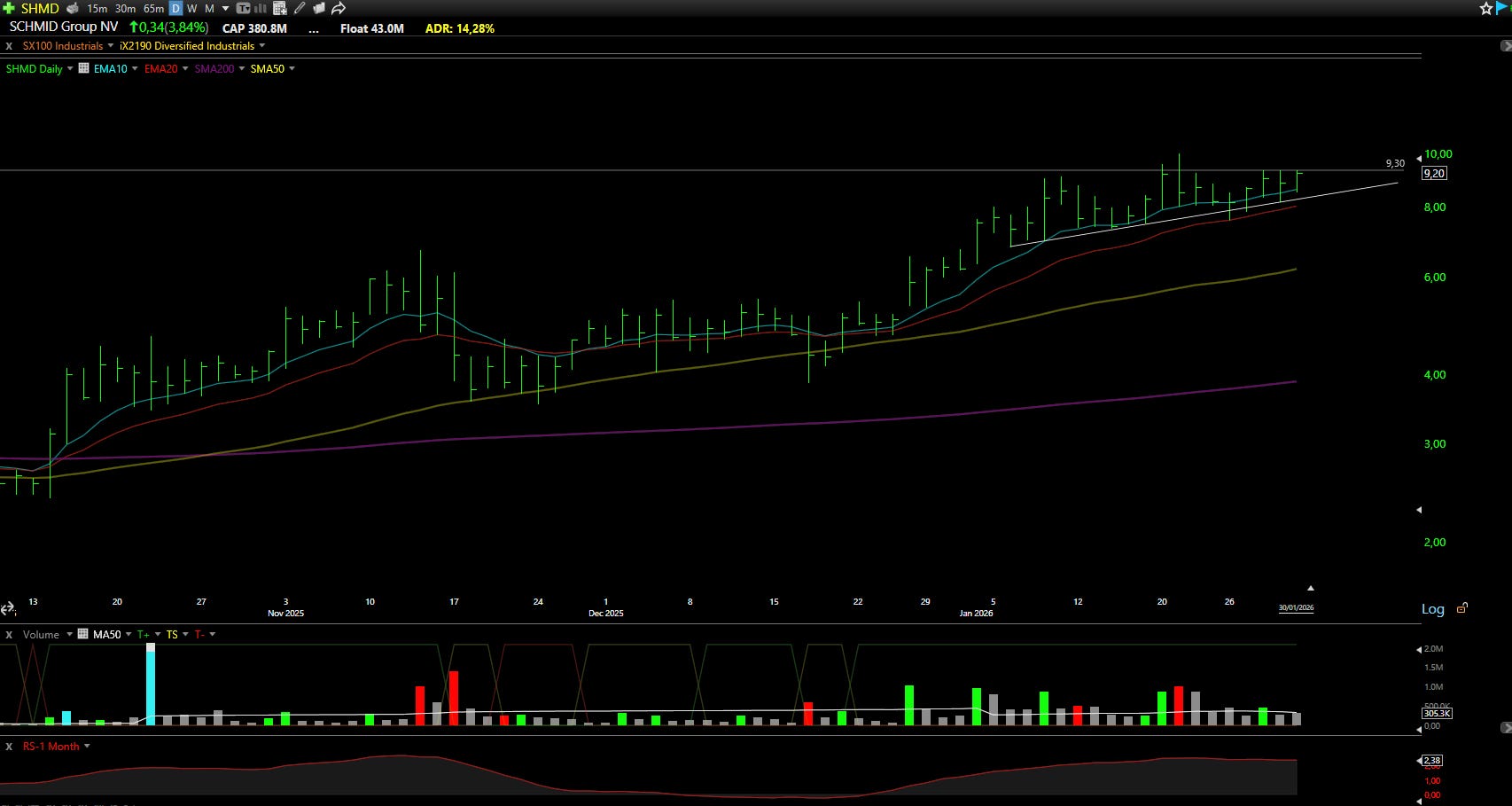
Technical Outlook: The stock is riding both the 10-day and 20-day exponential moving averages, respecting the uptrend nicely. Shares are approaching all-time highs around $10.00, which means there’s no overhead resistance once that level is cleared: a bullish technical setup. The stock typically exhibits high volatility with an average daily range of around 15%, but over the past couple of days, volatility has compressed to roughly half that level, often a sign that a larger move is building. Combined with strong relative strength versus the broader market, the technical picture is constructive.
BIOA: BioAge Labs Inc ⚠️
What they do: A clinical-stage biopharmaceutical company focused on targeting the biology of aging
Why watch? BioAge has been on a remarkable run over the past three months, driven by two significant catalysts. In December, the company reported interim Phase 1 findings showing that its oral small molecule NLRP3 inhibitor, BGE-102, successfully reduced markers of inflammation in patients. For context, NLRP3 is a key component of the inflammasome, a protein complex that triggers inflammatory responses. Chronic inflammation is implicated in numerous age-related diseases, making NLRP3 inhibition an attractive therapeutic target with broad potential applications.
Shortly after BioAge’s Phase 1 data, Eli Lilly announced its intention to acquire Ventyx Biosciences for its NLRP3 inhibitors, VTX2735 and VTX3232, among other anti-inflammatory assets. This acquisition provided significant validation for the NLRP3 mechanism and sparked investor interest across companies working in this space. BioAge is not a one-trick pony, however. The company also has APJ agonist programs in development, as well as discovery platforms and partnerships with pharmaceutical giants, including Novartis and Eli Lilly.
The momentum continued in January when Piper Sandler initiated coverage with an Overweight rating and a $73 price target, calling BioAge a “key name to own” in the biotech space. The analyst highlighted BGE-102 as an oral, once-daily, CNS-penetrant NLRP3 inhibitor with “strong” Phase 1 data in obese patients. On January 21st, the company capitalized on this enthusiasm by pricing an upsized $115 million public offering at $19.50 per share: essentially at the actual market price.
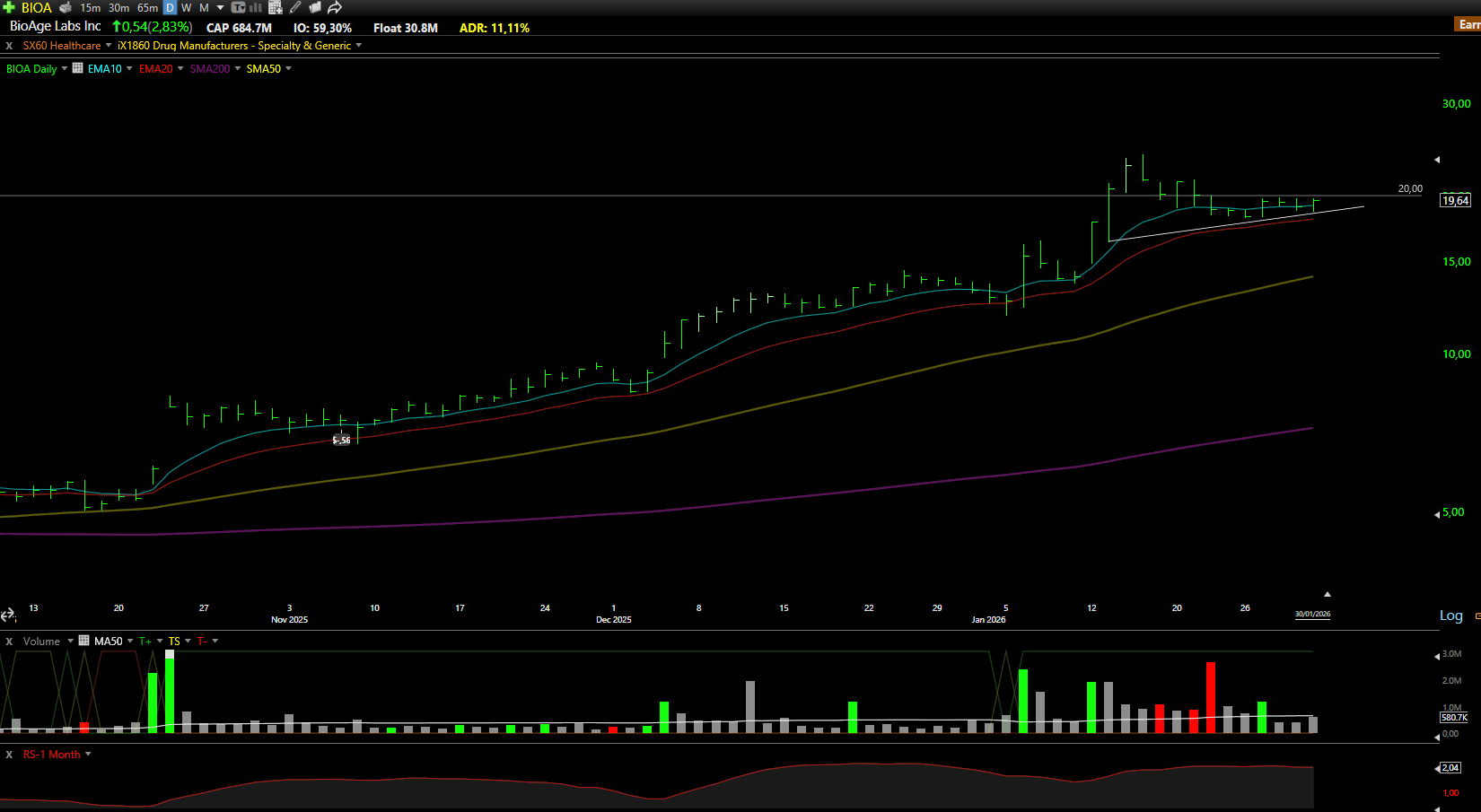
Technical Outlook: After a blistering 350%+ rally, the stock is now consolidating constructively below the $20.00 level on declining volume, a healthy digestion of gains. The rising 10-day and 20-day exponential moving averages are providing support, and the consolidation pattern suggests the stock is building energy for the next move. A decisive break above $20.00 could spark a new leg higher. The risk-reward setup is favorable for investors who missed the initial move, as the consolidation provides a second chance to establish positions with defined risk below the moving average support levels.
LGIH: LGI Homes Inc 📊
What they do: A homebuilder focused on entry-level and first-time homebuyers
Why watch? The past several months have been punishing for LGI Homes shareholders, and the fundamental picture has been challenging. The housing market has faced significant headwinds due to affordability issues: elevated mortgage rates combined with high home prices have priced many potential buyers out of the market, leading to a sharp decline in homebuilding activity. Revenue has dropped 35% year-over-year, and the company’s growing debt balance has become a concern. Management has continued to take on leverage to maintain a large lot position in a rapidly inflating cost environment, which has compressed margins and raised questions about financial flexibility.
So why include this in the watchlist? Because markets are forward-looking, there are early signs of stabilization. Net new orders have started to show improvement, and backlog data is also trending positively: both leading indicators that suggest demand may be bottoming. Additionally, there are potential policy catalysts on the horizon that could serve as levers to stimulate homebuilding activity. Whether through regulatory changes, incentives for first-time buyers, or infrastructure investments, the political environment could shift in ways that benefit homebuilders.
The key question is whether the worst is behind us. Housing is a cyclical industry, and LGI’s focus on entry-level homes positions it well if affordability improves through either lower rates or wage growth. The company has a proven operating model and strong market positions in its core geographies. If the macro environment stabilizes, LGI could see a sharp rebound in both sentiment and fundamentals.
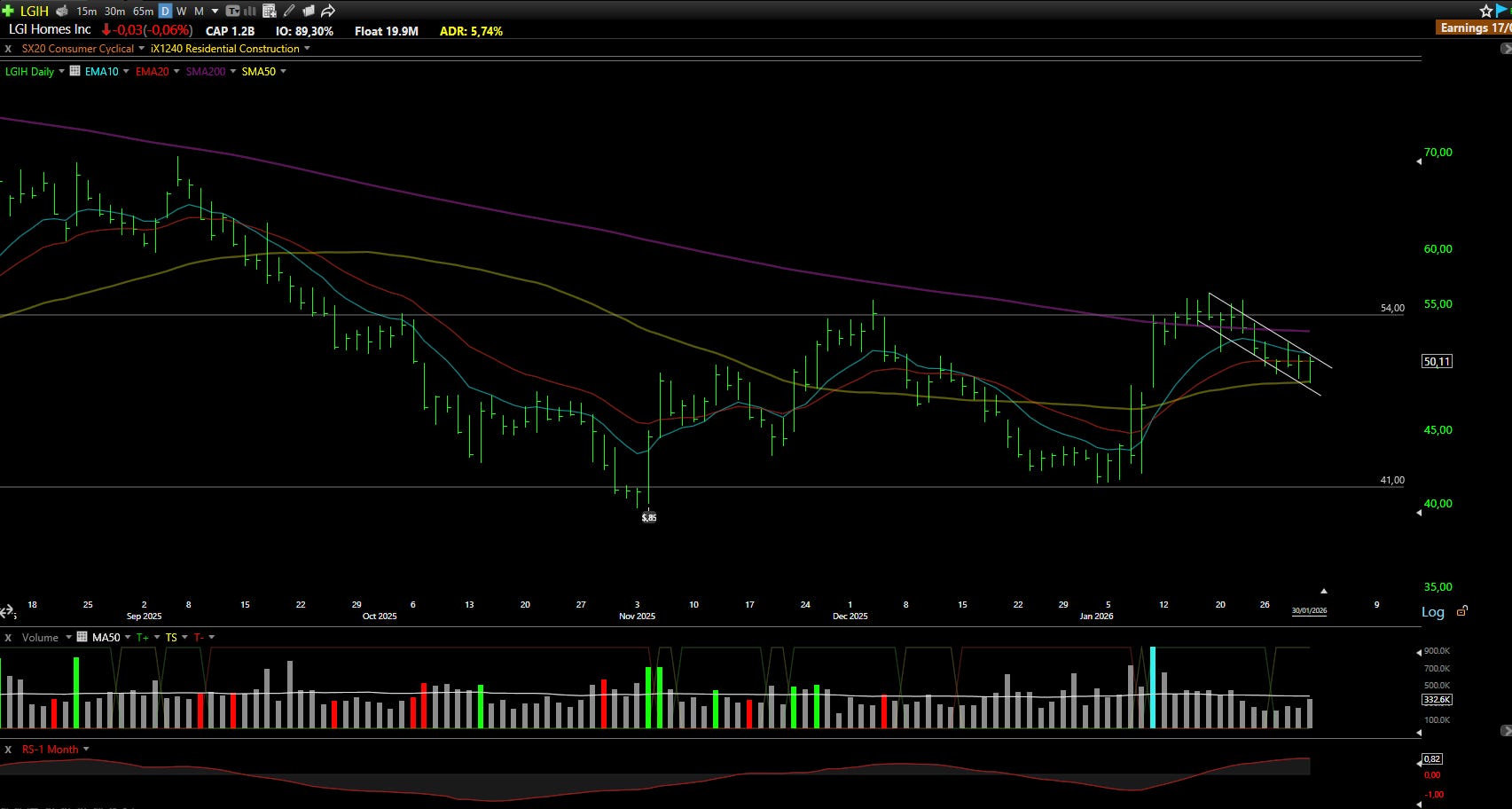
Technical Outlook: The chart is showing early signs of a potential bottom. The stock has formed a double bottom pattern, once in November 2025 and again in January 2026: a classic reversal signal. On Friday, despite a broad market selloff, LGI shares closed nearly flat, bouncing precisely off the 50-day simple moving average. This type of resilience in the face of market weakness often precedes a trend change. Could this be the final shakeout before the turn? It’s possible. Earnings are scheduled in two weeks, which could catalyze if management provides encouraging commentary on order trends and margin outlook.
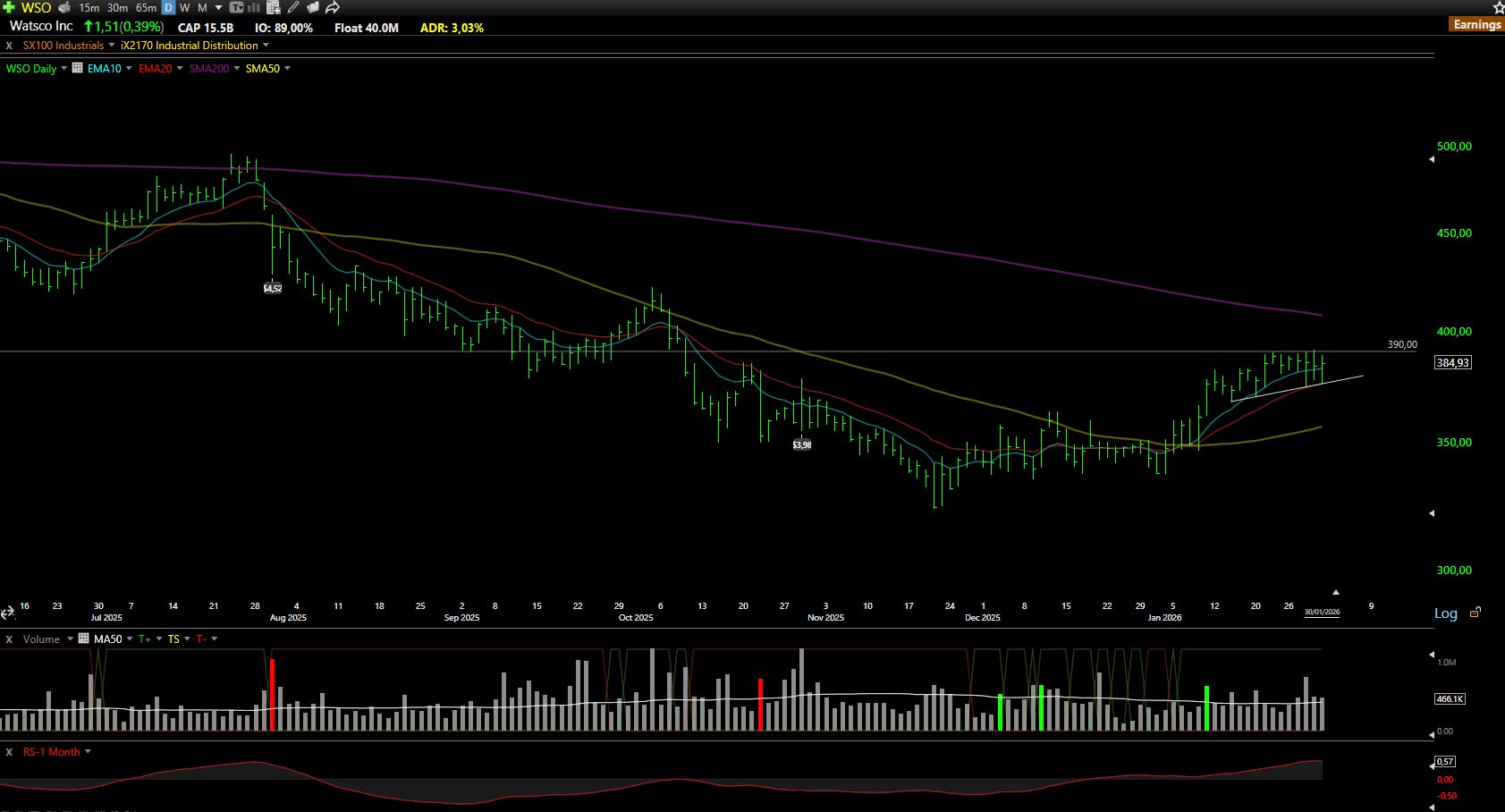
WSO: Watsco Inc 🛡️
What they do: The largest distributor of HVAC (heating, ventilation, and air conditioning) equipment in the US
Why watch? Watsco has a storied history dating back to 1956, when it was founded as a manufacturer of HVAC components. In 1972, current CEO and Chairman Albert H. Nahmad acquired a 38% stake and eventually pivoted the business toward distribution, beginning with the 1989 acquisition of Gemaire, one of Florida’s largest residential AC distributors. Since then, Watsco has acquired more than 70 independent distributors, typically family-owned operations with deep local roots and entrepreneurial cultures. These distributors are bound to the contractors they serve through relationships that often stretch back decades, sometimes generations, a competitive moat that’s difficult to replicate.
With a 20% market share, Watsco is the clear leader in HVAC distribution, well ahead of competitors like Lennox and Ferguson. However, the stock has been decimated recently (down nearly 50% from its highs) due to stagnant earnings growth. Sales have been essentially flat, which is understandable given the company’s exposure to the housing market and the broader slowdown in residential construction and renovation activity.
But here’s the contrarian case: the fundamentals of the HVAC replacement cycle remain intact. With approximately 100 million homes in the U.S., roughly 6-7 million HVAC units need replacing each year simply due to age and wear. Moreover, new regulatory standards are driving a shift toward more efficient, lower-emission equipment that uses less power but sells at higher price points. This creates a favorable mix shift for Watsco: even if unit volumes remain flat, higher average selling prices should drive revenue and margin expansion. We believe Watsco can resume growing earnings as consumers replace older systems with more expensive new equipment in the years ahead, particularly if mortgage rates decline and housing activity picks up.
Technical Outlook: The daily chart is showing clear signs of a bottoming process. A well-formed cup pattern has already developed, and the stock is now forming the handle. The 20-day exponential moving average is providing support during this consolidation, and volume has been constructive. The key level to watch is $390.00; a break above that level would complete the cup-and-handle pattern and likely trigger a move back up. Earnings are scheduled in two weeks.
PEW: GrabAGun Digital Holdings Inc ⚠️
What they do: An online firearms and accessories retailer
Why watch? Full disclosure: this is a highly speculative play with significant red flags. Donald Trump Jr. sits on the board, and the stock has been absolutely destroyed since its IPO. The company merged with SPAC Colombier Acquisition Corp., and the deal structure appears to have been designed more to benefit the principals (who cashed out $50 million in the original transaction) than the actual shareholders. The stock is widely hated, and the SPAC is viewed by many as a pump-and-dump scheme. The company trades near cash value, which on the surface makes it look cheap, but that doesn’t necessarily mean it’s a good investment.
So why mention it at all? Because sometimes speculation trumps fundamentals, there are a few factors worth monitoring. We’ve observed unusual options flow recently, with notable activity in $5 calls expiring at the end of February. This could be noise, or it could signal that someone knows something. Additionally, we’re approaching the midterm election cycle, which historically creates political tension and uncertainty. If conflicts or violence escalate, gun sales typically spike as consumers rush to purchase firearms amid fears of potential restrictions. This dynamic has played out repeatedly over the past decades.
Looking at the broader firearms sector, both Ruger (RGR) and Smith & Wesson (SWBI) are showing good relative strength and holding up well despite market weakness. PEW is in the same group, just far more speculative and volatile. This is not a long-term hold or a core portfolio position; it’s a tactical speculation on potential near-term catalysts related to political events or sector momentum.
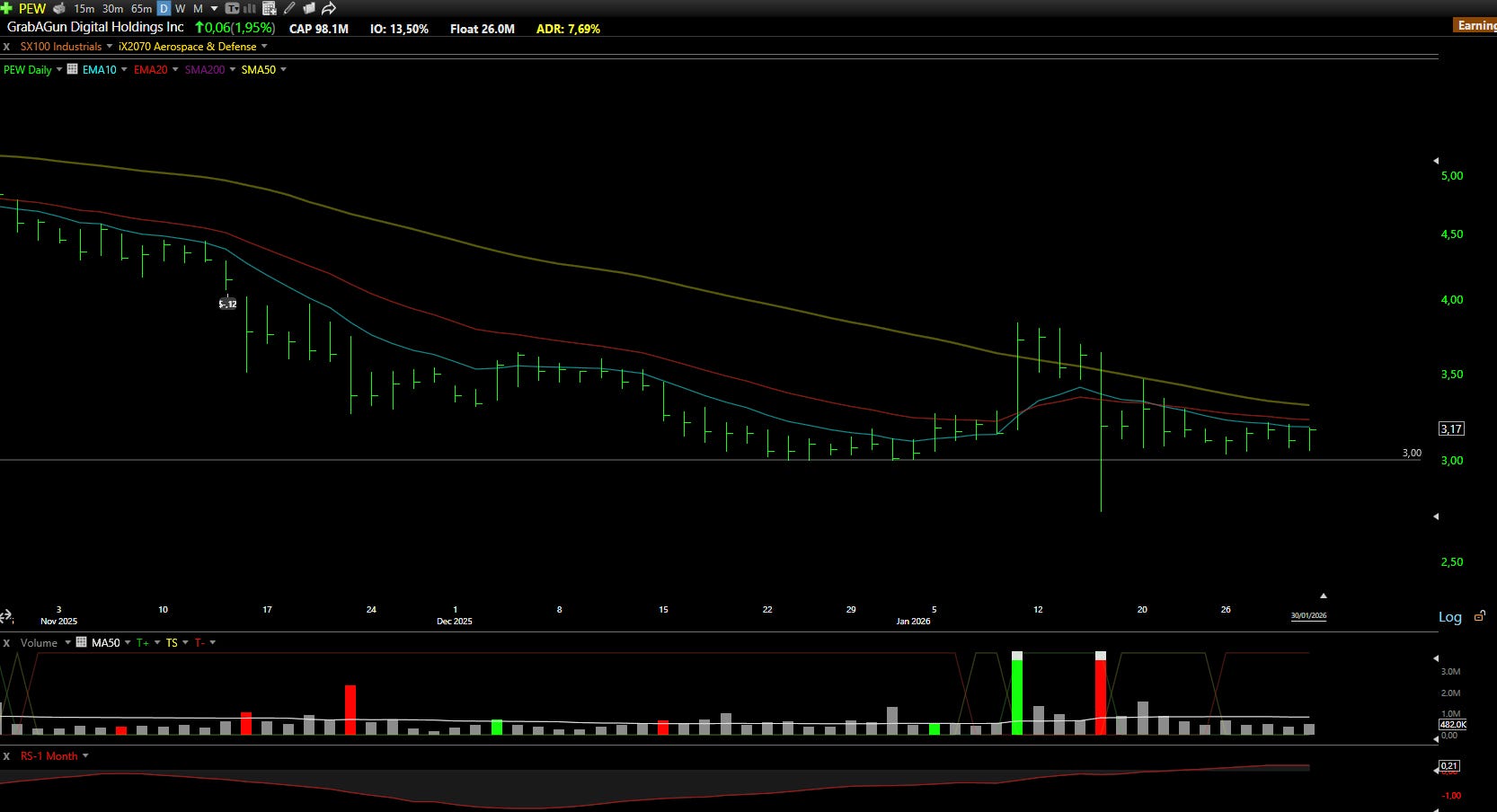
Technical Outlook: The stock has found strong support at the $3.00 key weekly level, which has held on multiple tests. If you examine the two large volume bars in January, they show clear signs of accumulation: institutional or informed buyers stepping in at these levels. From a risk-reward perspective, the trade setup is interesting: defined risk below $3.00 with potential upside if the stock can break through resistance. The immediate hurdle is the 10-day and 20-day exponential moving averages, which sit just above the current price around $3.30. A break above that level would signal the start of a potential leg higher. Manage position size carefully, given the speculative nature and checkered history of this name
These tickers below didn’t make the main cut, but they’re on our radar for a reason. We’ve vetted them; now you decide if they fit your game.
More opportunities, less noise.
⚡📋Scanned Stocks: Quick Picks
EVTV - Envirotech Vehicles Inc
IBRX - ImmunityBio Inc
OSS - One Stop Systems Inc
EKSO - EKSO Bionics Inc
WLFC - Willis Lease Finance Cp
"You get recessions, you have stock market declines. If you don't understand that's going to happen, then you're not ready, you won't do well in the markets."
Peter Lynch
Disclaimer: This analysis is for informational purposes only and should not be considered financial advice. Always conduct your research and consult with a licensed financial advisor before making investment decisions.